
Today, when I sat down to write, there were a million distractions. A friendly rottweiler decided to make our driveway their new home. Here I am, wanting to entice you all to continue studying during the summer, and this dog needs help. What did I do… I improvised. Yes, I pretended to be connected to the dog so that I could assess the situation and make the necessary phone calls needed to ensure its safety without shutting down with fear.
Improvisation is often misunderstood in dance education. New dancers hear the word and immediately assume they are expected to perform, entertain, or create something impressive on the spot. That pressure alone can shut students down before movement even begins. (True enough, if you’re a Teaching Artist, you have fun with this behavior, but our young students generally do not.)
The introduction matters.
Before students move, we talk about what improvisation actually is. It is not about perfection or performance. It is a structured opportunity to practice decision-making, explore movement possibilities, and become more aware of how the body responds in real time.
That clarity changes the atmosphere in the room. Students begin to see improvisation as a process instead of a test.
I must add…
Students with a routine or set warm-up
feel safer in the classroom. It’s grounding.
Click Here for five practical steps for teaching improvisation.
Here are five practical steps for teaching improvisation in a movement arts integration setting:
1. Define the Purpose
Begin by explaining what improvisation is—and what it is not.
Students often assume improvisation means performing without preparation. Instead, frame it as a structured opportunity to explore, make decisions, and practice responding to new situations.
Teacher Prompt:
“Today we’re not trying to be perfect. We’re practicing noticing, choosing, and adapting.”
2. Establish Clear Boundaries
Freedom works best with structure.
Provide specific parameters such as:
- Move only in personal space
- Use three levels (high, middle, low)
- Travel only when the music changes
- Respond to a particular word, image, or concept
Constraints reduce anxiety and give students a starting point.
3. Model Exploration
Demonstrate your own thinking process.
Show students multiple possible responses to the same prompt and narrate your choices:
“I could move fast or slow. I could make my shape larger or smaller. Neither answer is wrong.”
This teaches that improvisation is decision-making, not guessing.
4. Practice Reflection During Movement
Pause periodically and ask students:
- What choice did you make?
- What changed in your movement?
- What did you notice about the space?
- How did your body respond?
Reflection strengthens self-regulation and metacognition.
5. Debrief the Process, Not the Product
Focus feedback on decision-making rather than performance.
Ask:
- What strategy helped when you got stuck?
- When did you take a risk?
- How did you adapt when something unexpected happened?
- What would you try differently next time?
This shifts attention from “Was it good?” to “What did I learn?”
Leadership Insight
When taught intentionally, improvisation follows a progression:
Safety → Exploration → Decision-Making → Adaptation → Independence
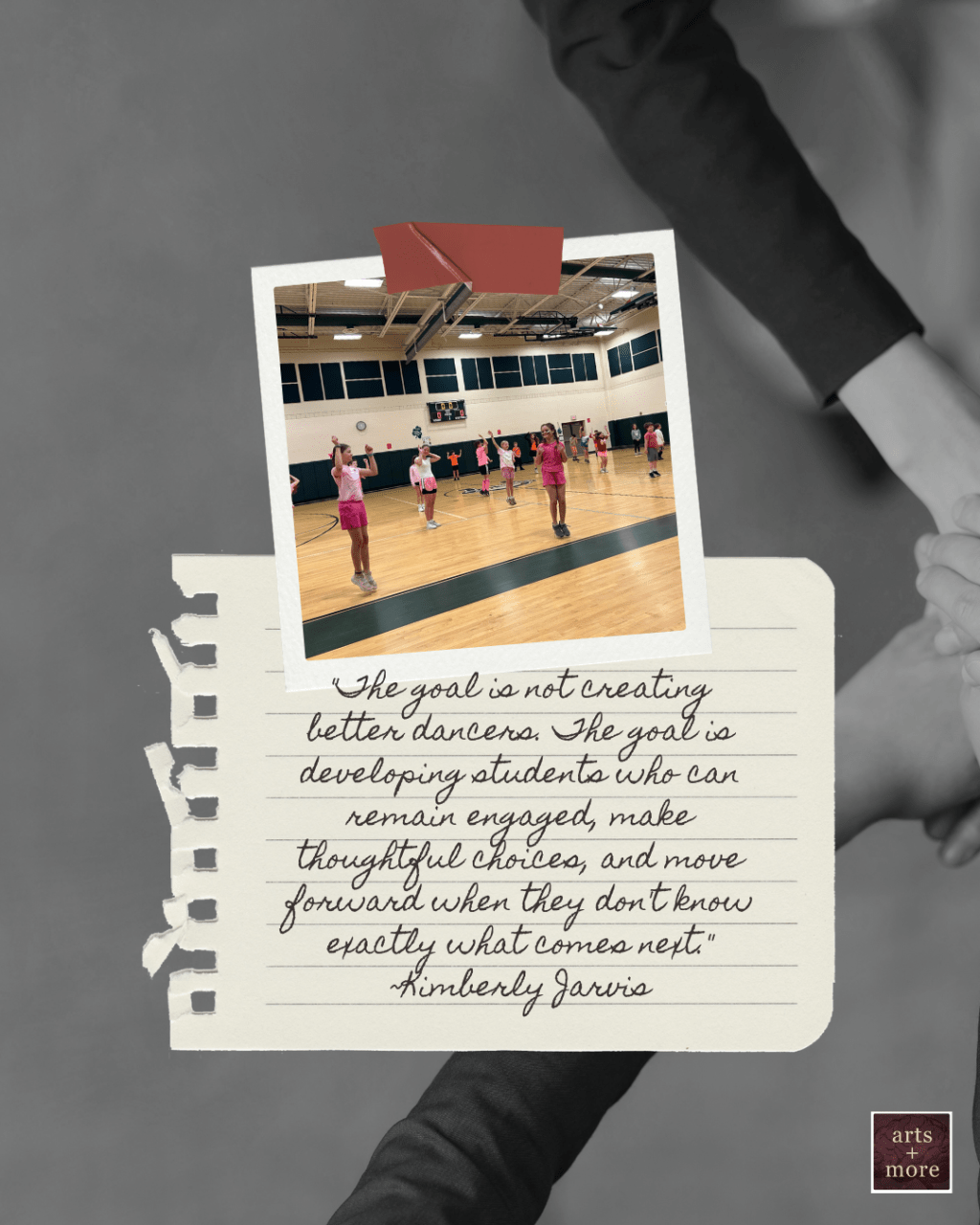
The goal is not creating better dancers. The goal is developing students who can remain engaged, make thoughtful choices, and move forward when they don’t know exactly what comes next. Those are skills that transfer directly to academics, leadership, and life.
Movement arts integration strengthens emotional wellness because students learn how to tolerate uncertainty without freezing. It supports self-regulation as dancers manage discomfort, remain present, and continue moving even when they feel unsure. It also develops creative problem-solving because every moment requires a choice: shift direction, change dynamics, alter timing, or respond to space differently.
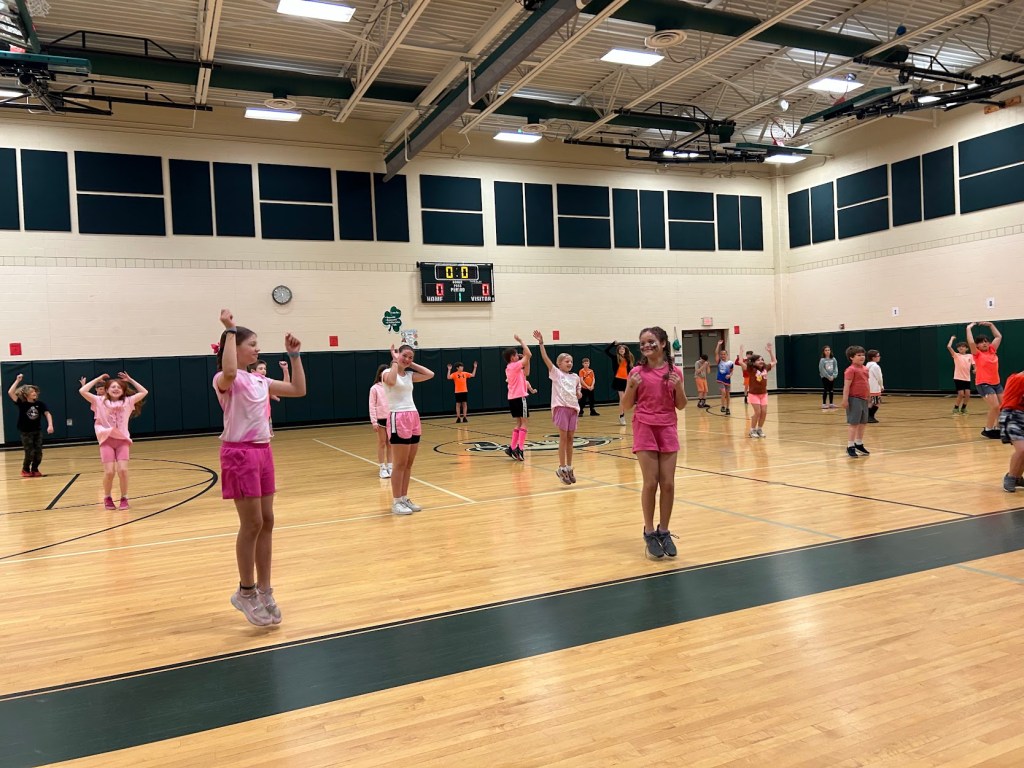
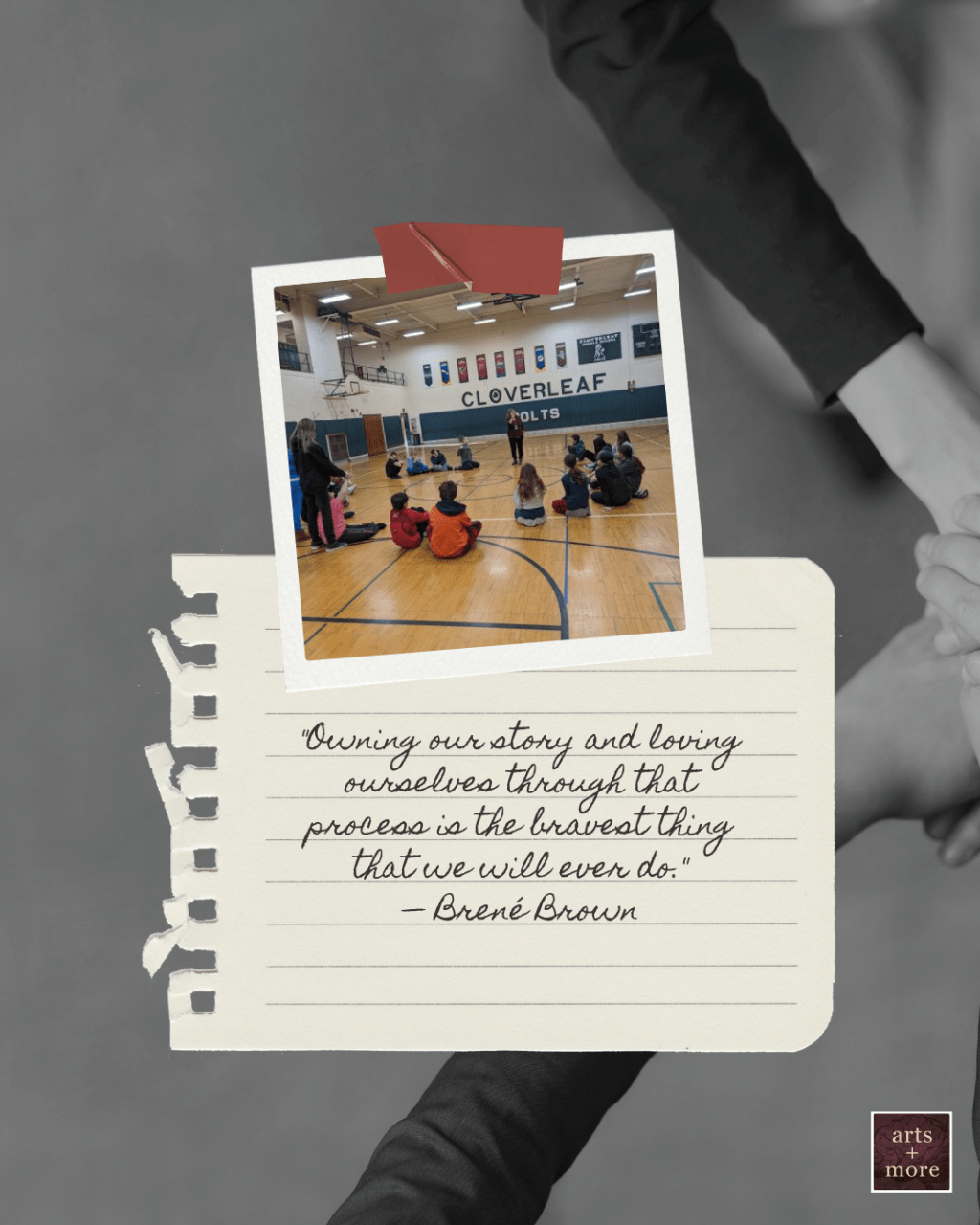
A recent moment during our flash mob rehearsals reminded me how powerful this process can be. As we finished our final rehearsal, a soft-spoken fourth-grade boy from Mrs. Perry’s class approached me and said, “Mrs. Jarvis, when I saw we had dance rehearsal today, I was frowning. I had a tough night, and my body didn’t want to dance. But once we got started practicing, I just felt so happy to dance, and now I’m excited. Would it be okay if I moved up to the front line? I can do this!”
That experience repeats itself in nearly every school. Students — and teachers as well — are often uncertain about the energy the movement activities may require. Yet once they begin, the emotional and physical shift is noticeable. Movement energizes the brain and body. The material they are studying becomes something they actively experience rather than simply observe.
Students learn and remember what they do while they dance.
Clear expectations are still essential.
There may not be one correct answer, but there is responsibility. Students must remain aware of their body, the space around them, and the people sharing it. Improvisation teaches freedom with accountability, collaboration, and spatial awareness all at once.
One of the most important leadership lessons emerges when students get stuck. Instead of immediately rescuing them with answers, we allow space for independent thinking. Over time, dancers rely less on external instruction and more on their own judgment.
That transfer reaches far beyond dance.
Students who learn to adapt, make decisions under pressure, stay engaged through discomfort, and navigate uncertainty become stronger collaborators, thinkers, and leaders in classrooms, performances, and everyday life.
Just a few minutes ago, the friendly rottweiler found its way to the backseat of the county Dog Warden’s SUV, and I was assured it would be medically treated and publicized to a wide audience so the owner could be found. Just now, I saw an online post indicating the owner was on their way to meet the Dog Warden. What might’ve stopped me in my tracks from fear, did not. In part because I’ve studied improvisation enough to know to just take the next step. I hope I have enticed you to continue exploring these leadership tips during the summer months. May the lesson ripple and touch the lives of your students!
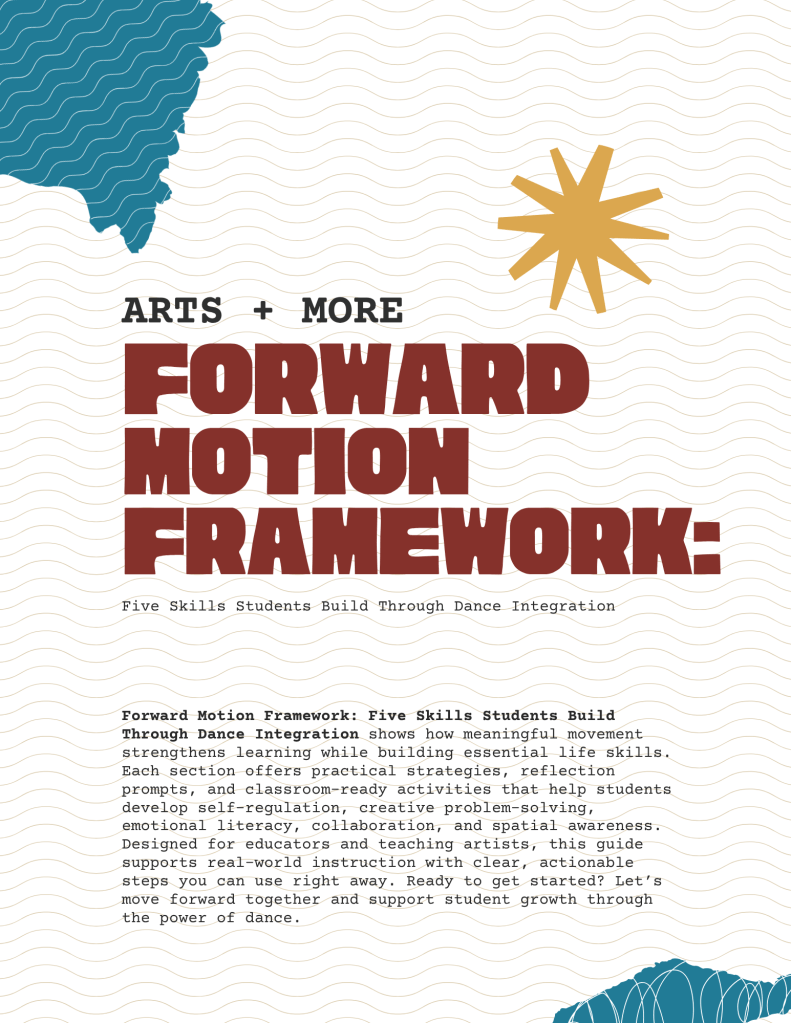
Ready to bring consistency, trust, and impact to your work?
I invite you to download the Forward Motion Framework for practical tips to clarify your goals, identify barriers, and create an action plan for forward movement…
…WHICH MEANS you’ll start showing up with intention for your students and your creative projects today.
If you’ve found value in this work, I would love to hear from you. A short testimonial, Google Review, or comment helps me improve and shows others the difference we’re striving to make together.


Leave a Reply