
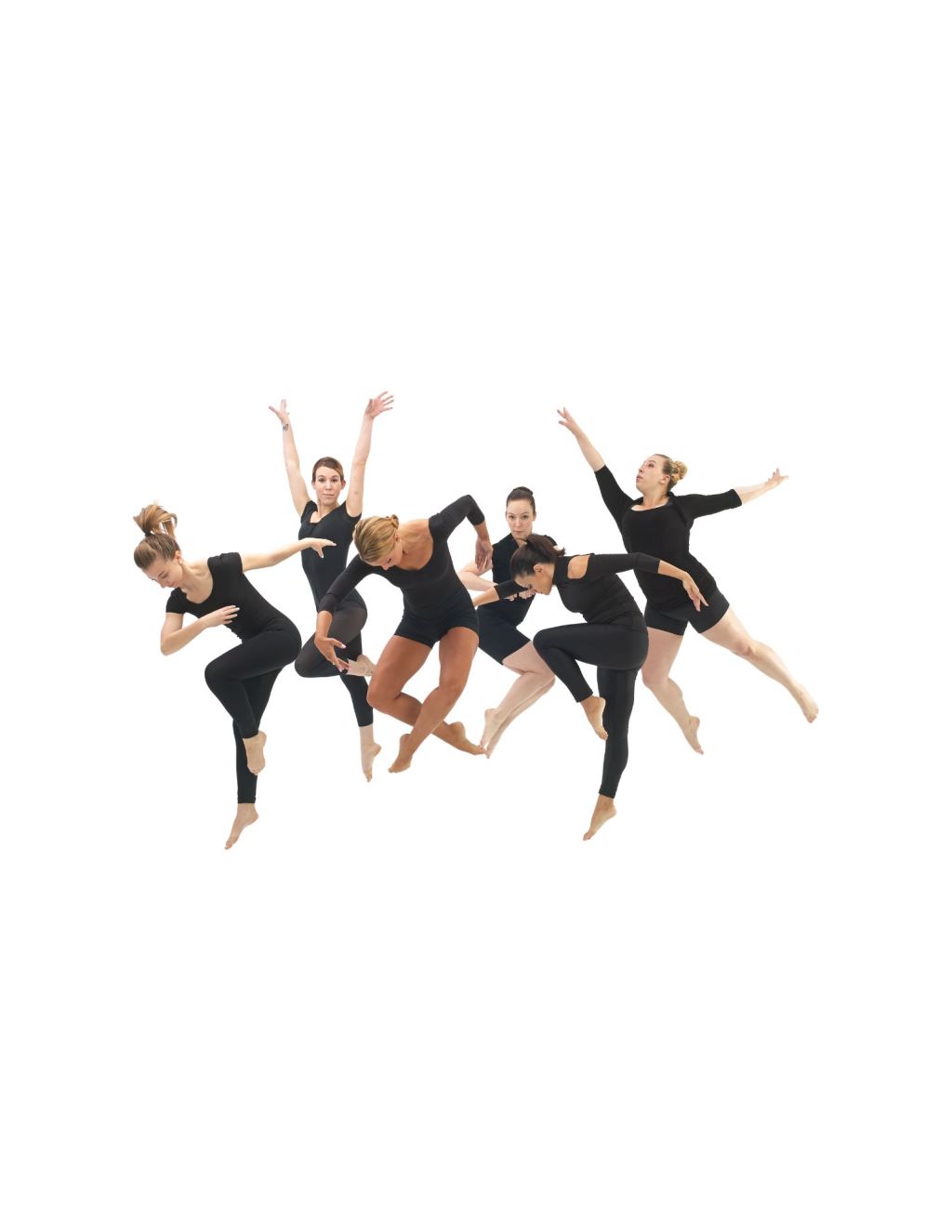
Clouds are more than shapes in the sky! They are clues that help us understand the weather. In this lesson, students become both scientists and dancers as they investigate the characteristics of stratus, cumulus, cirrus, and cumulonimbus clouds. Through observation, movement exploration, and creative expression, students discover how clouds form, what they look like, and what they can tell us about changing weather conditions. By embodying cloud formations through dance, students deepen their understanding of science concepts while developing spatial awareness, creativity, and movement vocabulary.
Grade Level
3rd–5th Grade
Duration
1–2 Class Periods (30–45 minutes each)
Science Standards
Earth and Space Science
- Clouds form from water vapor in the atmosphere.
- Different cloud types have different appearances and are associated with different weather conditions.
- Observations can be used to identify and describe cloud formations and predict weather.
Dance Standards
Creating
- Explore movement to represent ideas and concepts from science.
- Use movement qualities and spatial relationships to communicate meaning.
Performing
- Demonstrate body control and spatial awareness while performing movement sequences.
Responding
- Observe and describe movement using dance vocabulary.
Connecting
- Explore how dance can communicate observations of the natural world.
Essential Questions
- What are the different types of clouds?
- How can movement help us understand cloud formation?
- What can clouds tell us about weather?
Learning Objectives
Students will:
- Identify four major cloud types.
- Describe cloud characteristics using scientific observations.
- Use movement to represent cloud formations.
- Connect cloud appearance to possible weather conditions.
Success Criteria
Understanding Clouds
- I can identify stratus, cumulus, cirrus, and cumulonimbus clouds.
- I can describe what each cloud looks like.
Movement Exploration
- I can create movement that represents a cloud type.
- I can use levels, shapes, and energy to communicate cloud characteristics.
Vocabulary
Science Vocabulary
- Cloud
- Stratus
- Cumulus
- Cirrus
- Cumulonimbus
Dance Vocabulary
- Weight: Strong, Light
- Level: High, Middle, Low
- Relationship: Near, Far, Around
Materials
- Cloud images
- Open movement space
- Cloud cards
- Paper and pencils
Lesson Activities
Activity One: Cloud Observers
View images of different clouds.
Students make scientific observations:
- What shape do you notice?
- Does the cloud appear heavy or light?
- Is it high or low in the sky?
- What weather might it bring?
Activity Two: Become the Clouds
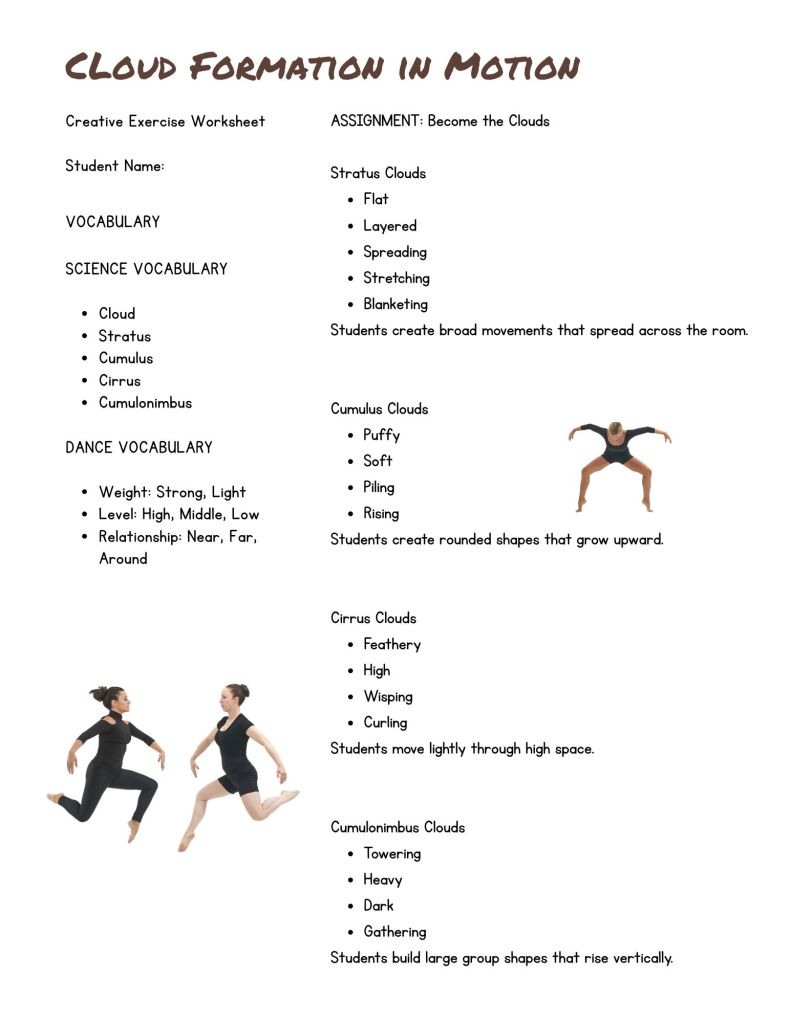
Stratus Clouds
- Flat
- Layered
- Spreading
- Stretching
- Blanketing
Students create broad movements that spread across the room.
Cumulus Clouds
- Puffy
- Soft
- Piling
- Rising
Students create rounded shapes that grow upward.
Cirrus Clouds
- Feathery
- High
- Wisping
- Curling
Students move lightly through high space.
Cumulonimbus Clouds
- Towering
- Heavy
- Dark
- Gathering
Students build large group shapes that rise vertically.
Activity Three: Cloud Gallery Walk
Groups perform their cloud formation.
Observers answer:
- Which cloud type was represented?
- What movement made it recognizable?
- What weather might this cloud bring?
Adaptations and Modifications
Learner Needs Addressed
Students with varying physical, sensory, and learning needs.
Adapted Materials
- Visual cloud cards
- Seated movement options
- Partner support
Instructional Strategies
- Model each cloud before exploration.
- Use repeated vocabulary.
- Allow multiple movement solutions.
Peer Support & Grouping Ideas
- Small-group cloud creation.
- Partner observation discussions.
Assessment
Students identify cloud types and explain how their movement represented the cloud’s characteristics.
Lesson Conclusion
Clouds provide important clues about weather. Today students observed, created, and performed cloud formations, using movement to understand how clouds look, move, and help us predict weather.
Ready to bring consistency, trust, and impact to your work?
I invite you to download the Forward Motion Framework for practical tips to clarify your goals, identify barriers, and create an action plan for forward movement…
…WHICH MEANS you’ll start showing up with intention for your students and your creative projects today.
If you’ve found value in this work, I would love to hear from you. A short testimonial, Google Review, or comment helps me improve and shows others the difference we’re striving to make together.


Leave a Reply