
Tech week has a reputation. Long nights. Tight timelines. Frayed nerves. The moment when every lighting cue, costume change, prop table, microphone, and dance step must come together at once. It can feel chaotic. Yet tech week is also where the show becomes real.
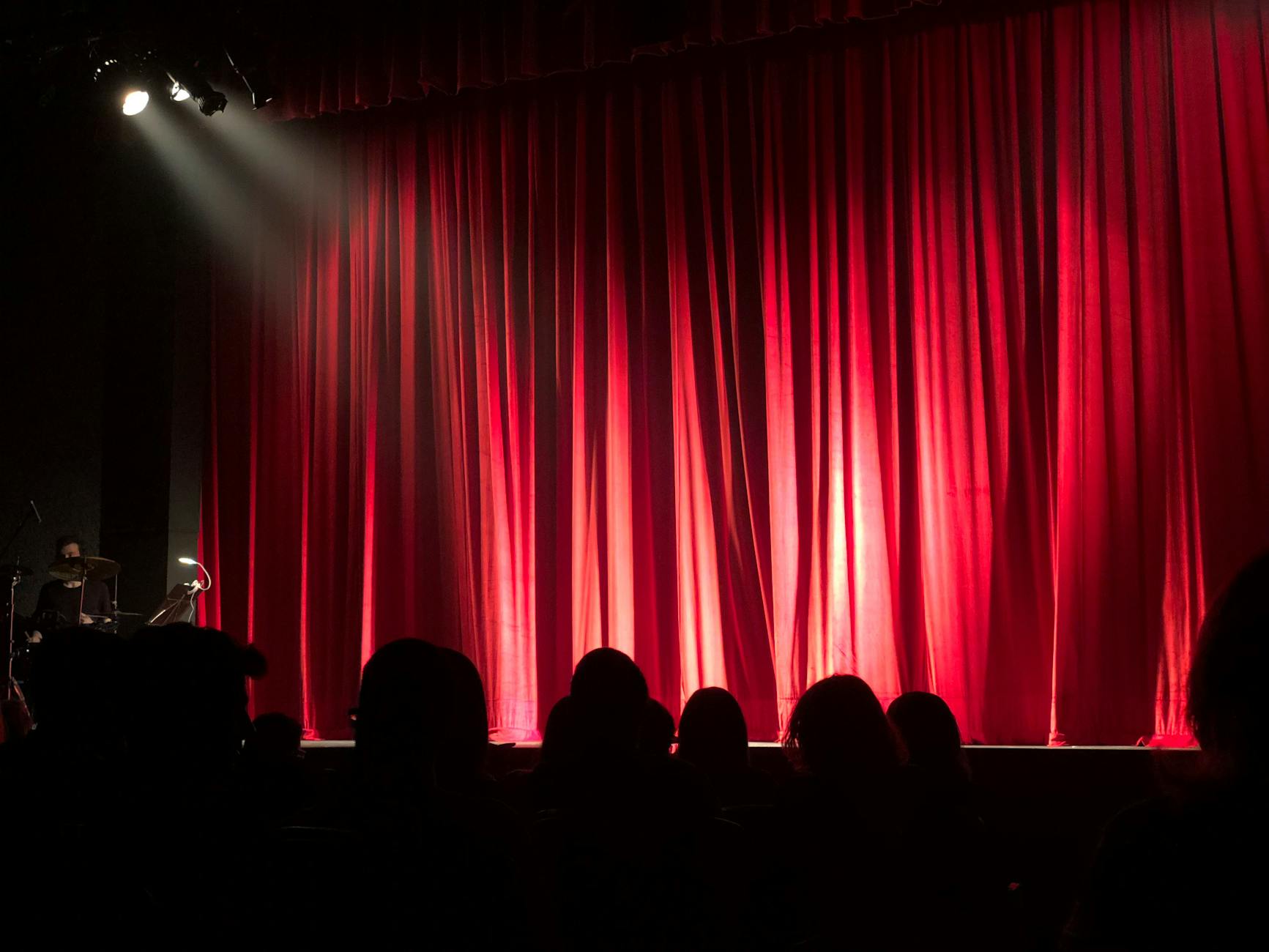
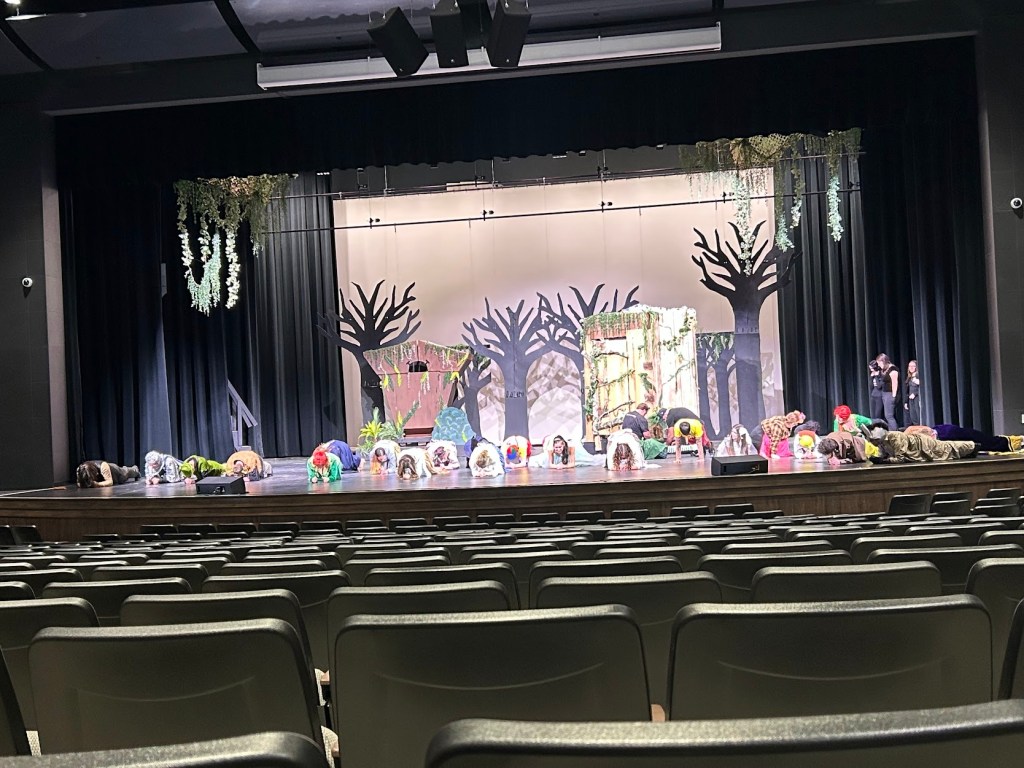
I wish I could say that “No volunteers were harmed in the taking of this photo”. Sadly, I could not find a single musical theater photograph in which I was certain a volunteer would not be offended by a prop, costume, placement, casting, or set piece. Things run hot during “Tech Week”. That’s why it’s called “Hell Week”.
This is the moment when a musical production finally comes together. Lights meet choreography. Costumes meet blocking. Sets meet storytelling. It is exciting, demanding, and sometimes chaotic. At its core, tech week is a lesson in collaboration.
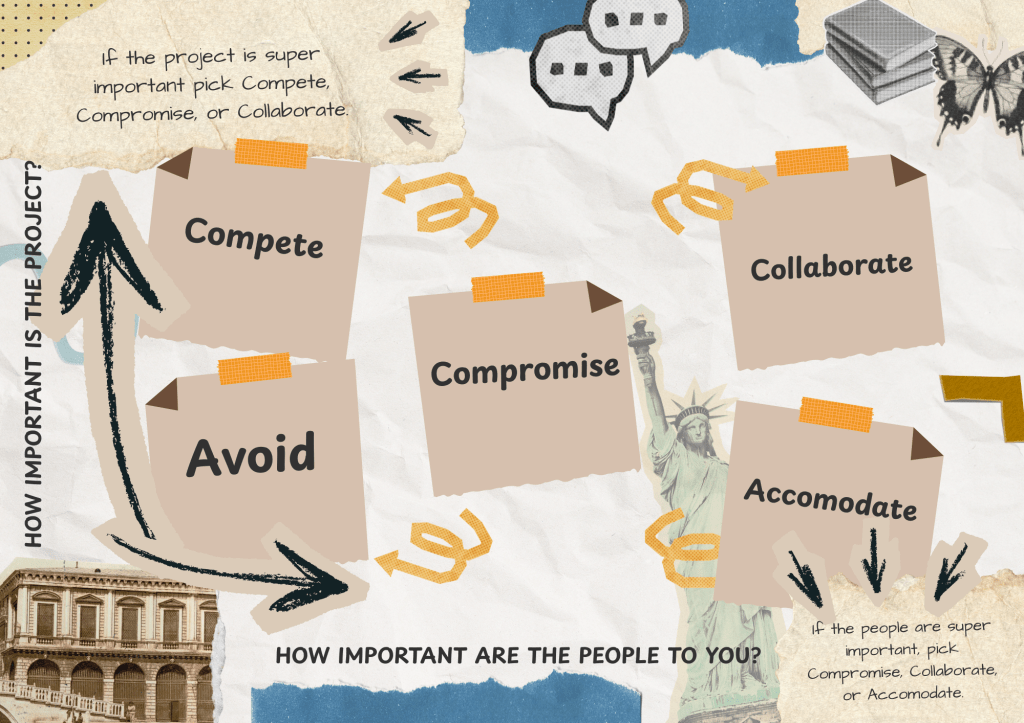
In the early 1970s, researchers Kenneth Thomas and Ralph Kilmann developed a framework for understanding how people respond to conflict. Their model, known as the Thomas-Kilmann Conflict Mode Instrument (TKI), identifies five approaches: competing, collaborating, compromising, avoiding, and accommodating. These styles are mapped across two traits: assertiveness and cooperativeness.
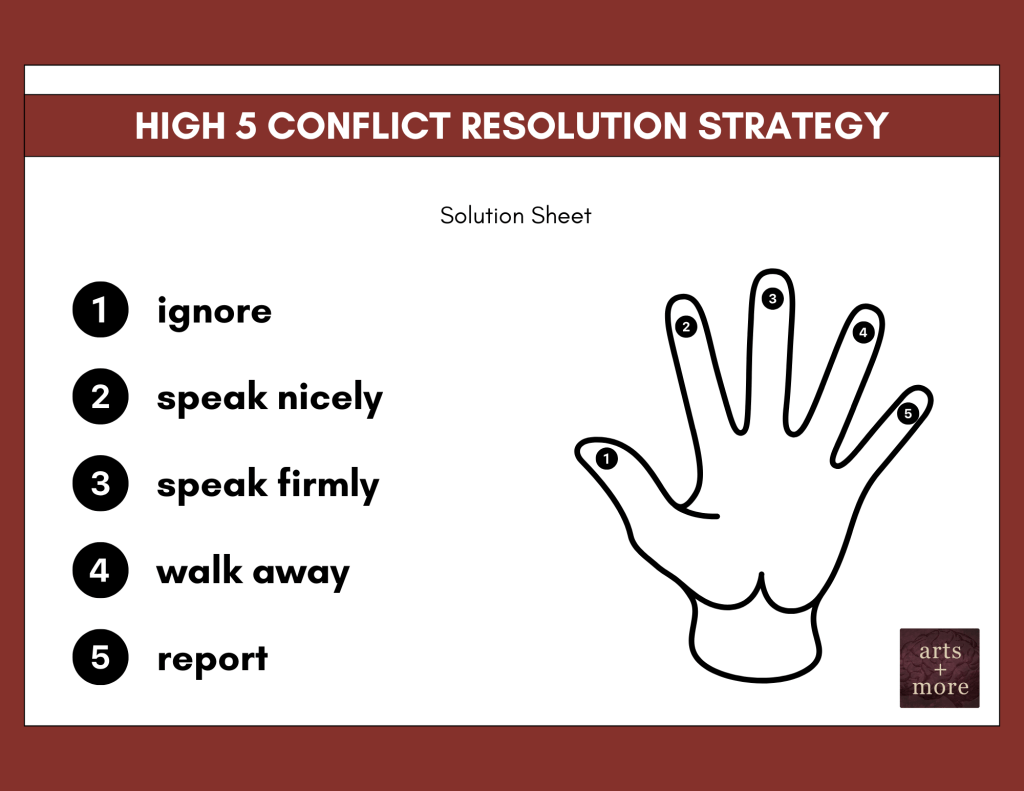
Tech week provides real examples of each approach. Some people compete, pushing hard for their idea to win. Others accommodate, yielding quickly to keep the peace. Sometimes teams compromise to move forward quickly. Occasionally, people avoid conflict entirely.
But the most effective productions lean toward collaboration. Collaboration requires both assertiveness and cooperation. It asks people to advocate for their work while also respecting the work of others. In theater, this approach usually produces the strongest result.
Expect the Messy Middle
Tech week exists to uncover problems. Lighting cues will need adjustments. Costumes will require quick repairs. Blocking may change once the set appears. None of this signals failure. It means the process is functioning exactly as intended.
A donkey argued with a tiger that the grass was blue. The tiger replied, “No, the grass is green.” The argument quickly became heated, so the two of them decided to take their dispute to the lion, the king of the jungle. As they approached the lion’s throne, the donkey began shouting, “Your Majesty, isn’t it true that the grass is blue?”
Unknown Origin
The lion replied, “Well, if you believe it’s blue, then it’s blue.”
The donkey continued, “The tiger disagrees with me. He keeps insisting I’m wrong. Punish him, Your Majesty.”
The lion declared, “The tiger will remain silent for five years. That is his punishment.” The donkey walked away happily, jumping around and shouting with joy.
The tiger accepted his punishment, but before leaving, he asked, “Your Majesty, if the grass is green, why am I being punished?” The lion replied, “This has nothing to do with whether the grass is green or blue. Your punishment is because it is beneath a creature with your courage and intelligence to waste time arguing with a donkey—trying to convince him of something you already know is true.”
The greatest waste of time is arguing with fools and fanatics—people who do not care about truth or reality, only about winning the argument and defending their beliefs. Some people, even when presented with all the evidence, simply cannot understand. Others are blinded by ego, hatred, and resentment. The only thing they care about is being right, even when they are not. When ignorance shouts, intelligence walks away.
Protect the Students
Young performers sense tension quickly. When adults stay calm and solution-focused, students remain confident. A steady rehearsal room allows them to take creative risks and focus on storytelling.
Respect Roles While Supporting the Production
Clear roles help a production move efficiently. Directors direct. Designers design. Choreographers shape movement. Crew members manage technical elements. Respecting these responsibilities keeps the process organized. At the same time, everyone must remain open to collaboration. The production matters more than individual ego.
Solve Problems Quietly
Most tech week challenges are small. A hem loosens. A cue runs late. A prop disappears. Strong teams address these issues quickly and privately. Public conflict slows the work and distracts the cast.
Remember the Goal
Every rehearsal and adjustment leads to the same moment: the curtain rising. The audience will not see the stress or the problem-solving. They will see a complete story created by many people working together.
Tech week is demanding because it places collaboration under pressure. When the team stays focused on students, professionalism, and the shared goal, that pressure becomes momentum.
And when opening night arrives, the work speaks for itself. 🎭
Ready to bring consistency, trust, and impact to your work?
I invite you to download the Forward Motion Framework for practical tips to clarify your goals, identify barriers, and create an action plan for forward movement…
…WHICH MEANS you’ll start showing up with intention for your students and your creative projects today.
If you’ve found value in this work, I would love to hear from you. A short testimonial, Google Review, or comment helps me improve and allows others to see the difference we’re striving to make together.


Leave a comment