
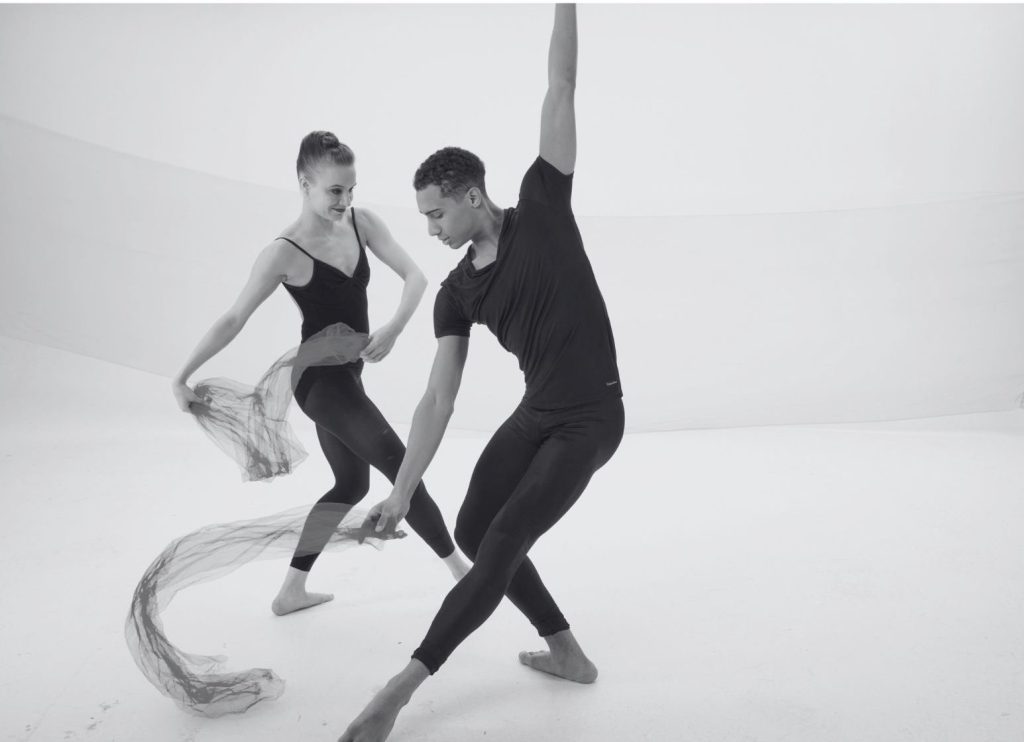
Exploring Inference Through Movement
This lesson transforms scientific thinking into a full-body experience. Students will practice making keen observations and forming logical inferences by watching movement sequences and identifying patterns. Through embodied games and peer-led demonstrations, learners apply the early steps of the scientific method in a highly interactive and meaningful way.
Grade Level:
Grades 3–6
Duration:
45 minutes
Standards
Science Standards
- Make careful observations and collect information to answer questions.
- Use evidence to form logical inferences and hypotheses.
- Understand that patterns and cause-and-effect relationships support scientific reasoning.
Dance Standards
- Creating: Explore movement ideas that model observation and description.
- Performing: Use movement intentionally to communicate scientific behaviors or events.
- Responding: Describe what is seen in movement and connect it to meaning or concept.
- Connecting: Make connections between movement elements and real-world investigation processes.
Essential Questions
- How can we practice being better observers?
- What clues in a person’s movement can help us understand what’s happening?
- What is the difference between what we see (observation) and what we think is happening (inference)?
Learning Objectives
- Use observation skills to describe detailed movement and spatial relationships.
- Practice making inferences based on movement patterns.
- Apply the first steps of the scientific method: observe, question, and form hypotheses.
- Collaborate with peers to interpret and communicate findings.
Success Criteria
- I can describe what I see clearly and with detail.
- I can tell the difference between observation and inference.
- I can form a hypothesis based on patterns I notice.
- I can use movement to show ideas clearly to others.
Vocabulary
- Observation: Noticing and describing what you see, hear, or feel without guessing.
- Inference: A conclusion or explanation based on evidence and reasoning.
- Hypothesis: A possible explanation or answer based on what you know.
- Pattern: Something that repeats or follows a predictable sequence.
- Body Shape, Balance, Level, Speed, Energy: Terms to help describe movement using dance vocabulary.
Materials
- Whiteboards, clipboards, or paper for observation notes
- Optional: Illustrated cards showing scientific method steps
- Science vocabulary posters
- Large open space for movement
- Music system (optional)
- Classroom lights that can be toggled off/on
Lesson Activities
Activity One: The Scientific Method Game
The Scientific Method Game is an interactive classroom activity that turns observation and critical thinking into a playful investigation. A small group of student volunteers improvises movement around the room, dancing freely while one student secretly controls when the group pauses and resumes. The rest of the class acts as scientists, observing the patterns and taking notes. To heighten the mystery, the teacher can manipulate external factors like turning the music or lights on and off at random. Students must use the scientific method—making observations, recording data, forming hypotheses, and testing their ideas—to determine the true reason behind the pauses. This engaging game sparks curiosity, encourages teamwork, and leads to wildly creative theories as students apply real scientific thinking to a dynamic, movement-based mystery.
- Select 5–7 volunteers to improvise movement around the room.
- Choose one student secretly to act as the “Controller” who starts and stops movement.
- Optional: Teacher randomly changes music and/or lighting to serve as red herrings.
- The rest of the class acts as “scientists,” observing the moving group, taking notes about when and why pauses occur.
- After several rounds, students write hypotheses about what causes the pauses.
- Test hypotheses through another observation round.
- Conclude with a class discussion about the “true cause,” highlighting the difference between observation and inference.
Activity Two: Group Demonstrations
- Introduce the concept that scientists often observe before they experiment. Just like scientists, dancers also create meaning through physical choices that can be observed and interpreted.
- Divide the class into small groups (3–5 students per group).
Each group creates a short movement phrase or frozen tableau that communicates an idea—this could be abstract (e.g., “a storm,” “cooperation”) or literal (e.g., “an animal,” “a cycle”). Groups should not reveal what their movement represents.

- While one group performs, the rest of the class becomes “scientific observers.” Students use their observation sheets or notebooks to record:
- What body parts are moving?
- What kinds of shapes, levels, or directions do they see?
- What is the speed and energy of the movement?
- Where in space are the dancers located (high/low, near/far, together/apart)?
- After observing, students share their inferences: “I think this group was showing ___ because I noticed ___.”
- The performing group reveals their intended meaning. Discuss whether the observers’ inferences matched and what clues were strong indicators.
- Rotate until all groups have performed and been observed.
Adaptations and Modifications
Learner Needs Addressed
- Supports students with difficulty sequencing, attention challenges, emerging expressive language, and mobility considerations.
Adapted Materials / Tools
- Provide a visual checklist or sentence frames for observations and inferences.
- Allow students to draw what they saw instead of writing.
- Use photo examples or short videos as warm-ups to scaffold interpretation.
- Offer movement roles that don’t require locomotion (e.g., arm shapes, seated levels).
Instructional Strategies
- Model how to describe movement using neutral, factual language.
- Offer sample inferences and backtrack to the evidence that supports them.
- Use color-coded symbols (e.g., blue = slow, red = fast) to label observed qualities.
- Emphasize that “wrong guesses” are part of scientific thinking.
Peer Support & Grouping Ideas
- Pair students with complementary strengths (e.g., strong movers + strong describers).
- Assign roles within each group: Dancer, Observer, Recorder, Presenter.
- Use buddy readers or peer scribes for students who need assistance with language.
Assessment
Formative Observations
- Are students focused and able to notice detailed aspects of movement?
- Do students record meaningful evidence (not just “they moved”)?
- Are inferences logically connected to observations?
Student Work Samples
- Observation sheets with drawings, labels, or written descriptions.
- Completed sentence frames: “I observed ___, so I think ___.”
- Sequencing cards showing beginning, middle, and end of movement analysis.
Reflection Prompts
- “What did you notice today that surprised you?”
- “How did your guess change after you watched more closely?”
- “What’s the difference between what you saw and what you thought it meant?”
Lesson Conclusion
In this lesson, students explored how careful observation and thoughtful inference are essential to both science and movement. By analyzing peer performances and generating hypotheses about what they were seeing, learners practiced the fundamental scientific habit of using evidence to support ideas. This embodied approach to scientific thinking deepens students’ awareness, builds interpretive skills, and nurtures a culture of curiosity and critical reflection. Whether in a laboratory or on a dance floor, seeing clearly and thinking deeply go hand in hand.

Leave a comment