
Exploring the Scientific Method Through Movement
Students actively embody the steps of the scientific method by moving through each phase in a physical sequence. This lesson transforms an abstract scientific process into an engaging and memorable experience using space, gesture, and collaboration.
Grade Level:
Grades 3–6
Duration:
45 minutes
Standards
Science Standards
- Understand and apply the steps of the scientific method.
- Make observations, form hypotheses, conduct simple experiments, and communicate conclusions.
- Demonstrate understanding of cause-and-effect relationships in scientific investigations.
Dance Standards
- Creating: Explore and improvise movements that represent a process or concept.
- Performing: Use clear spatial and expressive movement to communicate meaning.
- Responding: Reflect on how movement can model and explain scientific ideas.
- Connecting: Relate movement to real-world systems, such as the scientific method.
Essential Questions
- What are the steps of the scientific method?
- How can we use our bodies to show each step of the scientific process?
- Why is sequencing important when solving scientific problems?
Learning Objectives
- Identify and describe the steps of the scientific method.
- Use movement to represent each step in sequence.
- Collaborate with peers to model scientific thinking through physical actions.
- Apply the scientific method in a real-world scenario using both thought and action.
Success Criteria
- I can name and describe each step of the scientific method.
- I can use movement to show what each step looks like.
- I can work with my group to act out a science process in the correct order.
- I can explain my observations and conclusions clearly.
Vocabulary
- Question: A curious thought or problem to be tested.
- Hypothesis: A guess or prediction based on what you already know.
- Experiment: A test to see if the hypothesis is correct.
- Observe: To watch and notice what happens.
- Conclude: To decide what the results show.
- Scientific Method: A step-by-step process used to answer questions and solve problems.
- Body Parts: Head, Arms, Elbows, Hands, Back, Stomach, Legs, Feet, Etc.
- Body Shapes: Straight, Curved, Angular, Twisted, Wide, Narrow.
- Body Balance: People can be on balance or off balance.
- Body Place: The dancer’s position – alone, with another, or together as a group.
- Body Levels: High, Medium, and Low
- Body Size: Large, Medium, Petite
- Body Speed: Slow, Medium, Fast
- Body Energy: Smooth, Sharp
Materials
- Posters or large signs labeled: Question, Hypothesis, Experiment, Observe, Conclude
- Open space for movement (classroom or hallway)
- Optional: flipbook or illustrated cards of the scientific method
- Science prompt or mini-experiment (e.g., “What dissolves in water?”)
- Clipboards and paper for notes or drawing reflections
Lesson Activities
Activity One: Scientific Method Walk-Through
- Set up the room with signs posted in order: Question → Hypothesis → Experiment → Observe → Conclude.
- As a class, walk in a circle, pausing every eight counts perform a pose that defines the word.
- Question: Students make a pose about asking a question.
- Hypothesis: Students mime “thinking”.
- Experiment: Pretend to pour, mix, or test something.
- Observe: Mime looking through magnifying glasses and pretend to write notes.
- Conclude: Use thumbs up/down or speak a short sentence about what was learned.
Activity Two: Worksheet

There are three things we need to learn about movement as we dive into learning science through dance movements.
- The Body Moves!
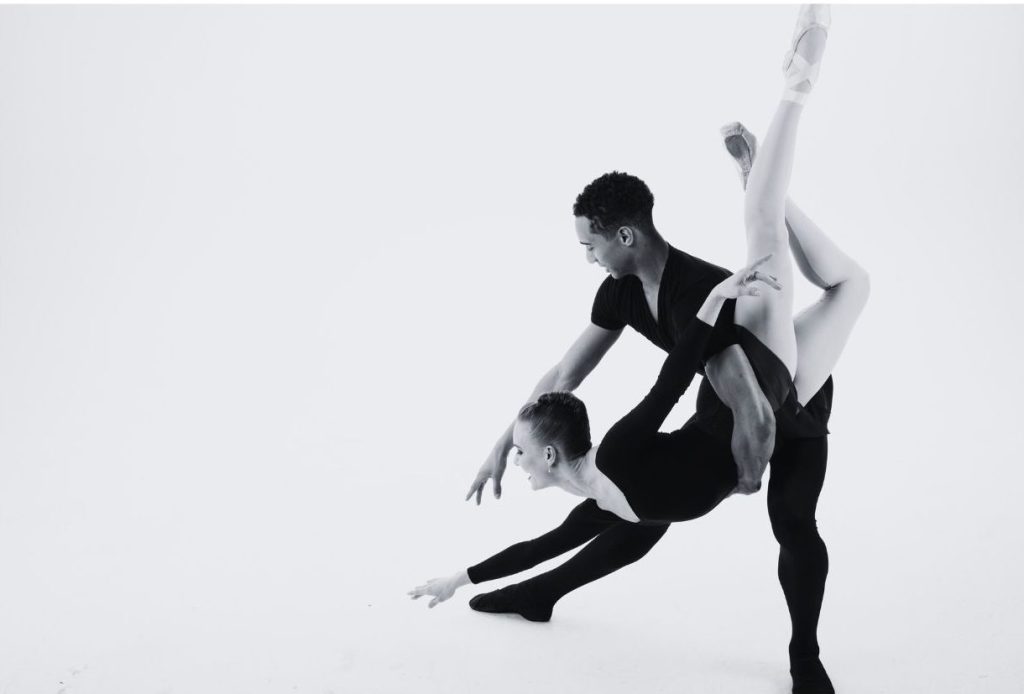
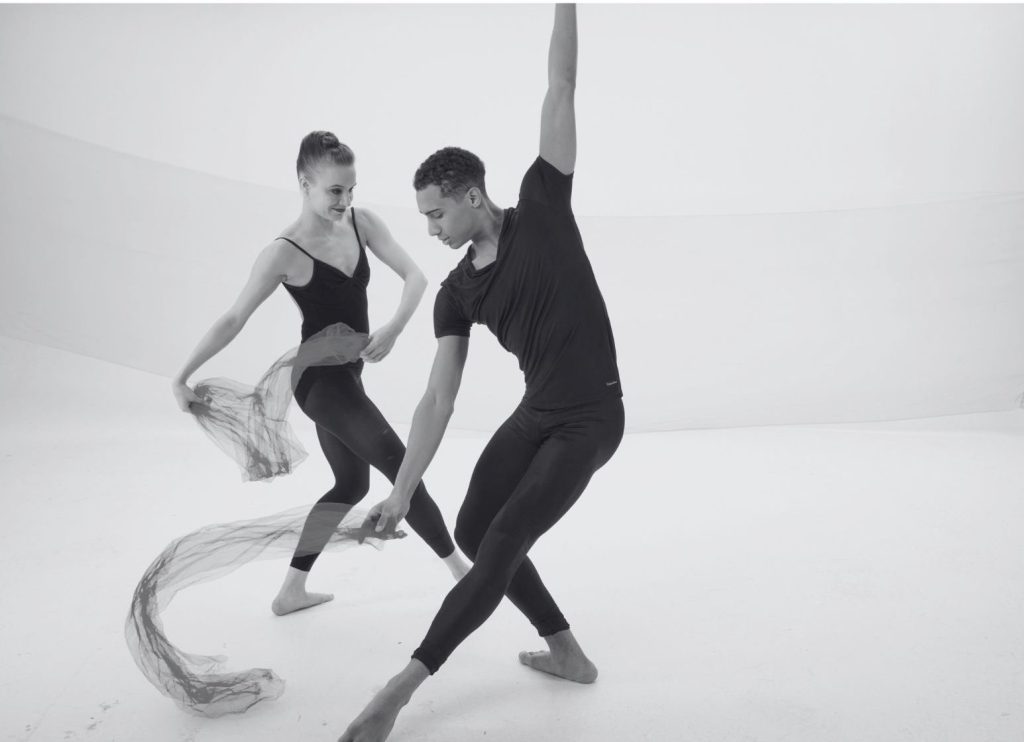
- Observe which body parts of the dancer are doing what? The male dancer in Picture 1 is lifting the female dancer with one arm.
- Observe what shapes are being made. The dancer in Picture 2 is standing on a straight leg with a curved arm above her head.
- Observe if the dancers are balanced or off balance. The female dancer in Picture 1 is off balance. She would fall if her partner did not hold her.
- There is Space for Movement!
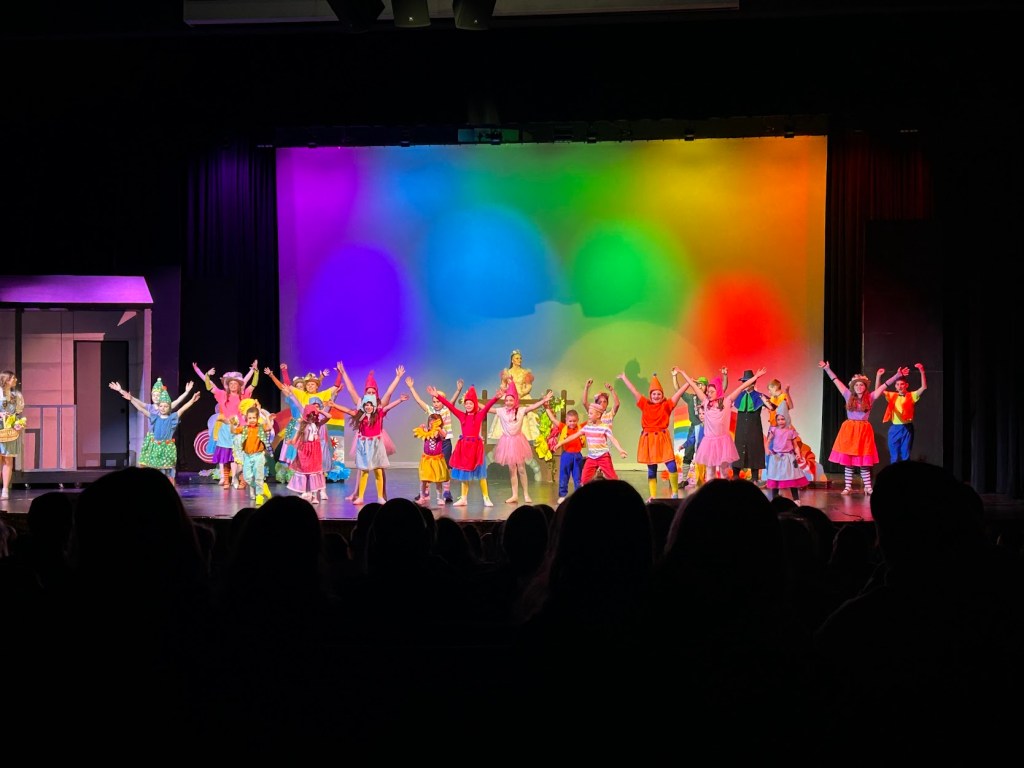
- Observe what place the dancer is in. In Picture 3 the dancers are together as a group.
- Observe what level the dancers are making their dances. In Picture 2 the dancer is reaching for high space and in Picture 1 the dancers are reaching toward low space.
- Observe the size of the movement. In Picture 3 the group makes the dancing space seem big.
- There is a Way for Movement!
- Imagine how the dancers got into the pictured pose. What is the speed they are moving, in your imagination. Slow, Medium, or Fast?
- Consider the energy of their movement? Is the movement Smooth or Sharp?
Adaptations and Modifications
Learner Needs Addressed
- Supports students with sequencing difficulties, attention deficits, language processing issues, and limited mobility.
Adapted Materials / Tools
- Illustrated flipbooks or posters of each step.
- Audio cues or music prompts for step transitions.
- Tactile props (mini beakers, observation tools) for sensory engagement.
Instructional Strategies
- Repeat each step using gestures and voice.
- Use visual aids with icons and colors for each step.
- Scaffold student language with sentence starters:
- “I wonder if…”
- “I think ___ will happen because…”
- “I noticed that…”
- “We found out…”
Peer Support & Grouping Ideas
- Assign each student a role to physically represent one step.
- Mixed-ability pairs or trios for verbal and physical task sharing.
- Rotate responsibilities within small groups to build confidence.
Assessment
- Formative Observation: Watch students as they move—do they associate the correct action with the correct step?
- Verbal Check-Ins: Ask after each step, “What happens here?” or “What do we call this part?”
- Sequence Task: Give students illustrated cards and ask them to arrange the scientific method in the correct order.
- Reflection Prompt:
- “Which step was the easiest to act out? Why?”
- “What did our movements help you remember?”
By moving through the scientific method step by step, students internalize the process in a memorable and active way. Kinesthetic modeling reinforces each concept, while peer collaboration builds confidence and communication skills. Whether paired with a real experiment or a classroom role-play, the “Science Step-Up” lesson ensures students can recall and apply the scientific method with clarity, creativity, and physical confidence.

Leave a comment