
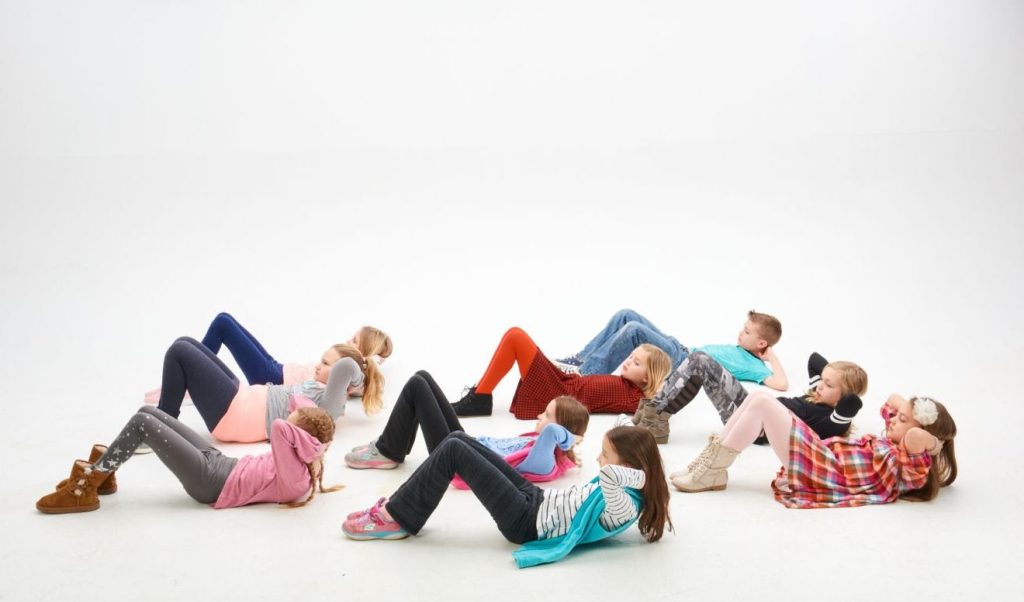
At the Arts Academy at Summit in Canton, Ohio, fourth-grade students participated in a 10-week Math & Science Movers program designed to combine physical fitness, academic rigor, and data literacy. This program encouraged students to engage their minds and bodies, reinforcing math and science standards through physical movement and real-life data collection.
School: Arts Academy at Summit, Canton, Ohio
Grade Level: 4th Grade
Program Duration: 10 Weeks
Focus: Cross-curricular Integration of Physical Education, Math, and Science

Overview
At the Arts Academy at Summit in Canton, Ohio, fourth-grade students participated in a 10-week Math & Science Movers program designed to combine physical fitness, academic rigor, and data literacy. This program encouraged students to engage their minds and bodies, reinforcing math and science standards through physical movement and real-life data collection.
From week one, students were introduced to the idea that movement and measurement could go hand-in-hand. They completed initial fitness testing in three areas:
- Heart Rate Recovery
- Sit and Reach Flexibility Test
- Push-Up Stamina Test
These initial scores provided a personal fitness baseline and laid the foundation for upcoming math and science applications.
Implementation
Fitness testing occurred during the first week and was repeated in week eight of the program. Throughout the first eight weeks, students participated in movement-rich lessons that integrated physical activity with key concepts in measurement, pattern recognition, estimation, and scientific inquiry. For example, students practiced estimating heartbeats per minute, timed their own recovery after aerobic exercises, and measured flexibility using protractors and rulers.

Data was recorded individually by students and also logged in class charts for trend analysis. PE teachers and classroom teachers worked collaboratively to help students maintain ownership of their data while emphasizing safe and respectful data sharing.
Data-Driven Learning in Weeks 9 & 10
The final two weeks were devoted to connecting students’ fitness data with the Ohio Department of Education’s 4th Grade Data Analysis Standards, which include:
- Creating and interpreting line plots, bar graphs, and tables
- Describing and analyzing data sets using vocabulary like “range,” “mode,” and “outliers”
- Drawing conclusions and identifying trends
Students used their own fitness testing data to:
- Create double bar graphs comparing week 1 and week 8 results
- Calculate averages and ranges for each fitness category
- Analyze trends, such as improvements in recovery time or push-up counts
They also participated in small-group discussions where they practiced drawing conclusions from aggregate classroom data, and they wrote brief summaries explaining what their data showed about their physical progress over time.
Privacy and Data Protection
To maintain student privacy and trust, the school implemented several safeguards:
- All health-related data used for analysis was anonymized before being shared for group work
- Teachers and administrators provided transparent communication to parents about data collection and its educational purpose
- Access to personal data was limited to the students and relevant educators
- The school emphasized that the goal was not competition, but personal growth and learning
This thoughtful approach allowed students to engage meaningfully with real data while respecting confidentiality and promoting a healthy mindset about wellness and learning.
Outcomes
Students showed measurable academic and physical growth during the program:
- Many students improved in flexibility, heart rate recovery, and muscular endurance
- Nearly all students demonstrated increased confidence with graphs, tables, and analysis terminology
- Teachers reported high levels of engagement and motivation, especially when students saw their own progress reflected in data visualizations
- Students better understood the real-world relevance of math and science skills, linking classroom learning with personal well-being
Conclusion
The Math & Science Movers program at the Arts Academy at Summit exemplifies how cross-disciplinary teaching, when supported by real-world data and student-centered strategies, can enhance both academic achievement and student wellness. By blending physical education with mathematical and scientific inquiry, this case study shows how schools can meet standards in innovative, meaningful ways—while also helping students move, grow, and thrive.



Leave a comment