
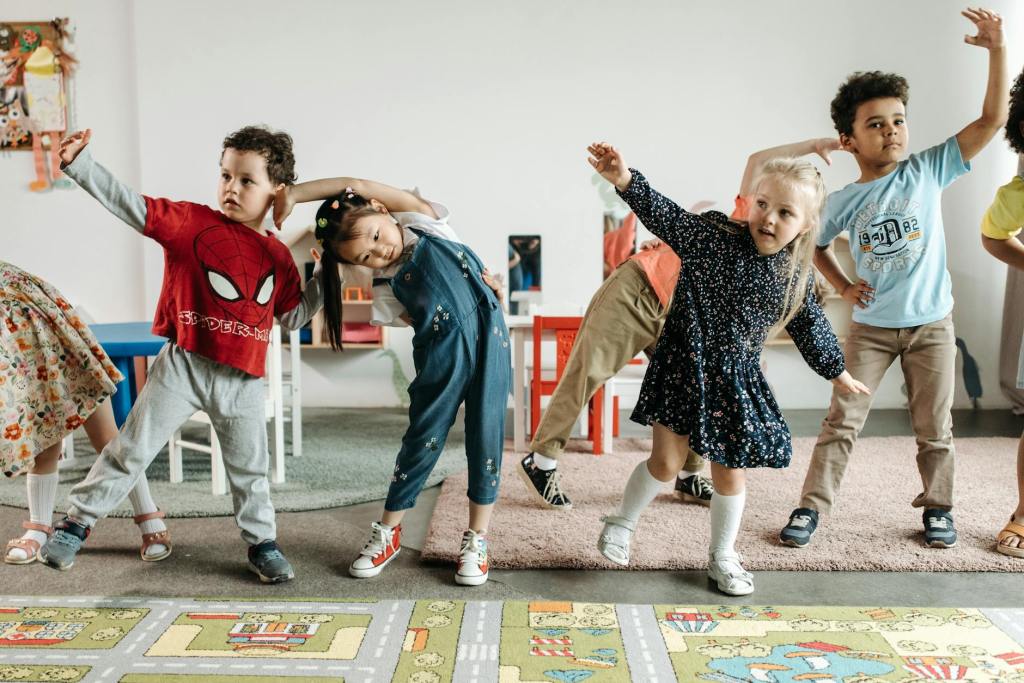
Welcome! Today we’ll explore how axial warm-ups and simple, seated dance movements can transform both classroom atmosphere and student engagement. These are not just “extra” activities; they are tools that shift how students experience learning. A posture can reveal confidence or hesitation. A shared rhythm can show whether a group is listening to itself. Even the way feet angle toward someone can signal curiosity before a question is ever asked. Movement makes the invisible visible.
When we move together, we uncover patterns of attention, trust, and learning that no worksheet can capture. In Math & Science Movers, we use dance and movement to make abstract concepts concrete and to ensure every student—including those with visible and invisible disabilities—feels they belong. By leading students through axial warm-ups, you give them a chance to connect, reset, and prepare their minds for deeper engagement.
Why does this matter? Brain science shows that when students dance, multiple regions of the brain light up—motor control, memory, coordination, and emotional centers all working in sync. This supports neuroplasticity, boosts focus, reduces stress, and builds social connection. The evidence is clear: movement changes the brain, the body, and the classroom.
Don’t be afraid to get moving. You’re not just teaching steps—you’re shaping clarity, connection, and collaborative growth. And in doing so, you’re helping math and science come alive.
Estimated Duration: 10–12 minutes
Space Needed: Students in their assigned spots (e.g., coordinate plane positions) with arms’ length between each other
Music: Instrumental track with a steady rhythm (preferably 90–120 BPM)
1. Breath and Posture Reset (30 seconds)
- Stand tall with feet hip-width apart, arms resting by the sides.
- Inhale deeply through the nose, arms float overhead.
- Exhale slowly through the mouth, arms float down.
- Repeat 2–3 cycles to establish focus and presence.

2. Isolations (2 minutes)
Purpose: Activate joints and increase mind-body connection.
- Head: Nod “yes,” shake “no,” tilt side to side. (8 counts each)
- Shoulders: Shrug shoulders up and down (8x), roll forward and back (8x).
- Torso: Twist side to side (slow and controlled), reach side to side (8x).
- Pelvis: Gentle pelvic tilts forward/back, side to side (8x each).
- Knees/Ankles: Bend and straighten knees in parallel, roll ankles in circles (4 each direction).
3. Swing & Bend Flow (2 minutes)
Purpose: Create full-body connection and introduce dynamic range.
- With soft knees, swing arms forward and back like pendulums (16 counts).
- Add a knee bend each time arms swing down. Feel the weight drop.
- Try side swings, allowing torso to follow the arms.
- End with a few full body swings down and roll-ups to standing.
4. Fitness Core Activation (2–3 minutes)
Purpose: Build strength and stamina.
- 8–10 crunches (seated or reclined if space allows)
- 10–15 second plank (front or on forearms)
- 8 modified push-ups (on knees or against the wall if needed)
- Return to standing slowly with a breath reset.
5. Balance Series (2 minutes)
Purpose: Focus on one supporting leg, engage the core, develop proprioception.
- Tree Pose prep: Stand on one leg, raise the other foot to calf or inner thigh (hold 8 counts each side).
- Tilt/Reach: Stand on one leg, extend opposite leg behind, arms reach forward like an airplane (8 counts each side).
- Repeat with eyes closed if appropriate for older or advanced students.

Adding Yoga Poses is a wonderful way to begin and end an integrative dance class.
6. Stretch Series (2 minutes)
Purpose: Increase flexibility and range of motion.
- Arms: Reach overhead, side stretch, hug yourself.
- Torso: Forward fold, roll up through the spine.
- Legs/Feet: Lunge stretch (deep bend in front leg), heel press back, point/flex feet.
- Dynamic hamstring stretch: Kick one leg gently forward while reaching opposite hand toward it.
7. Jumping Journey (2 minutes)
Purpose: Elevate heart rate, foster energy and adventure.
- Small jumps in place: Parallel feet, soft knees (16 counts).
- Jumping jacks or star jumps (8–10 reps).
- Directional jumps: Forward, back, side to side (4 each).
8. Final Centering Breath (30 seconds)
- Stand quietly, feet grounded.
- One hand on heart, one on belly.
- Inhale through the nose, exhale through the mouth.
- Remind students: “Your body is ready. Your mind is focused. Let’s explore through dance.”
This warm-up primes students for any movement-based lesson. It builds discipline, connection, and readiness across multiple traditions while anchoring students in their own strength, creativity, and presence.
Brain Benefits of Movement
Neuroplasticity and Brain Structure:
- Enhances neuroplasticity: boosts brain’s adaptability and formation of new neural connections.
- Increases gray matter volume in motor control, coordination, and memory areas (e.g., precentral gyrus, hippocampus).
- Improves white matter integrity, enhancing communication between brain regions, especially frontal/parietal lobes and corpus callosum.
Cognitive Function Enhancement:
- Boosts short- and long-term memory by activating key regions like the hippocampus.
- Sharpens focus, attention span, and executive function through concentrated dance practice.
- Enhances cognitive flexibility and decision-making via learning and adapting to complex routines.
- Develops spatial cognition and spatial awareness.
Emotional and Social Well-being:
- Reduces stress and elevates mood by releasing endorphins, dopamine, and serotonin.
- Fosters social connection, empathy, and community through partner and group dancing.
- Strengthens emotional resilience, aiding healthy processing of anxiety, trauma, and depression.
Potential Therapeutic Applications:
- Parkinson’s Disease and MS: improves motor control, balance, memory, and attention.
- Mild Cognitive Impairment (MCI): linked to improvements in global cognition, memory, visuospatial skills, and flexibility.

Leave a comment