
Memory, Meaning, and Momentum: Choreography as Applied Learning
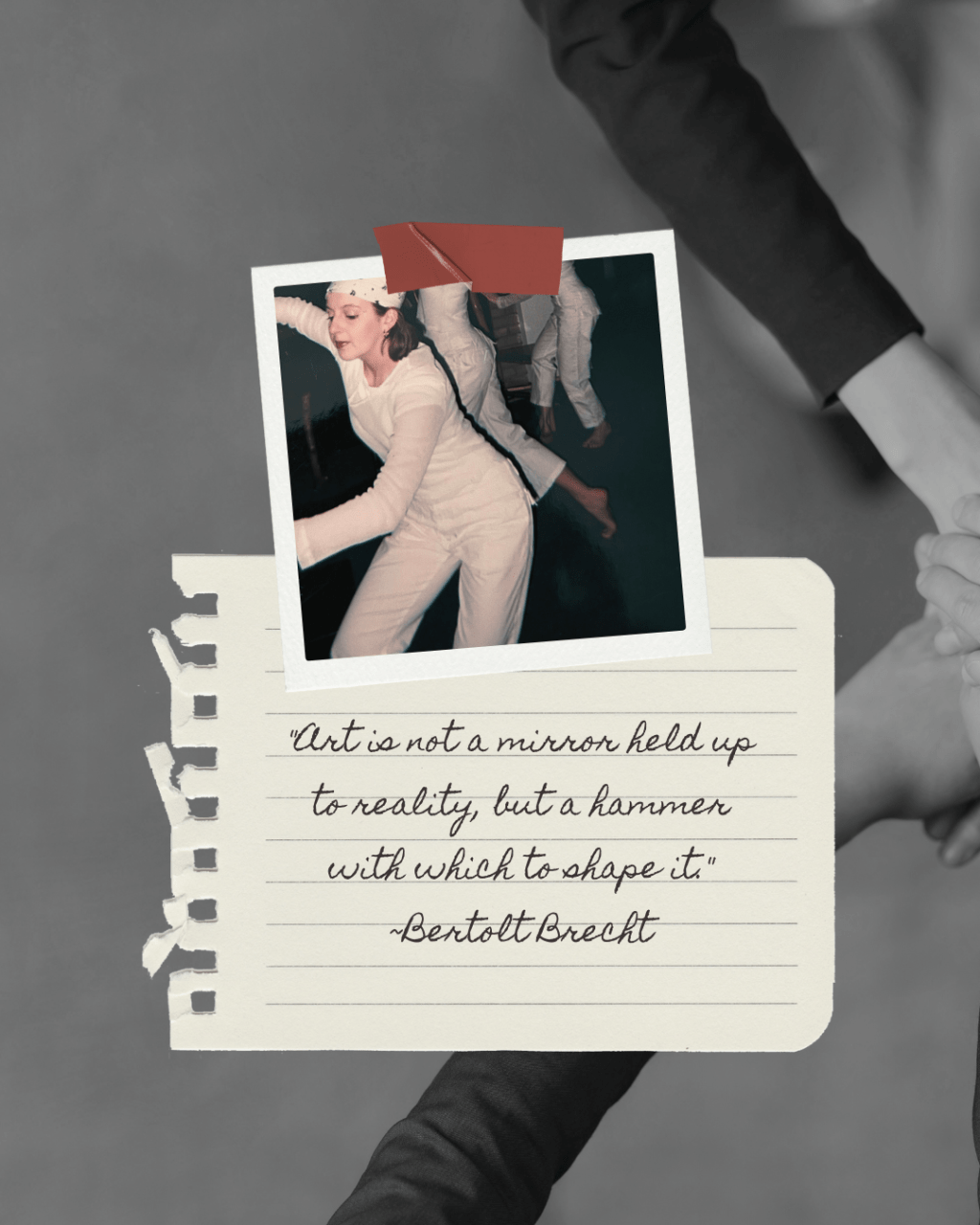
Tibetan Freedom Dance (2003), presented at the Celebrate Dance Concert in Canton, Ohio, offers a useful case study in how choreographic process can function as an educational framework. Created by choreographer Allison Chrusciel Prucha and performed by pre-professional contemporary dance students of Living Fountain Dance Company, the work situates artistic practice within historical, social, and pedagogical contexts.
The choreographic process emphasized student-centered learning. Rather than setting fixed material, the choreographer guided dancers through structured improvisation. Students were asked to explore individual responses to the music and narration drawn from the Tibetan Freedom Concert recordings. From these improvisations, dancers identified shared movement qualities and recurring gestures. These elements became the collective motif of the piece.
Once the motif was established, students worked directly with the choreographer to organize material into spatial patterns and symbolic group structures. This phase focused on compositional decision-making: repetition, accumulation, unison, and contrast. The process reinforced collaboration, pattern recognition, and the translation of abstract ideas into physical form. Students were not only performers, but contributors to the construction of meaning.
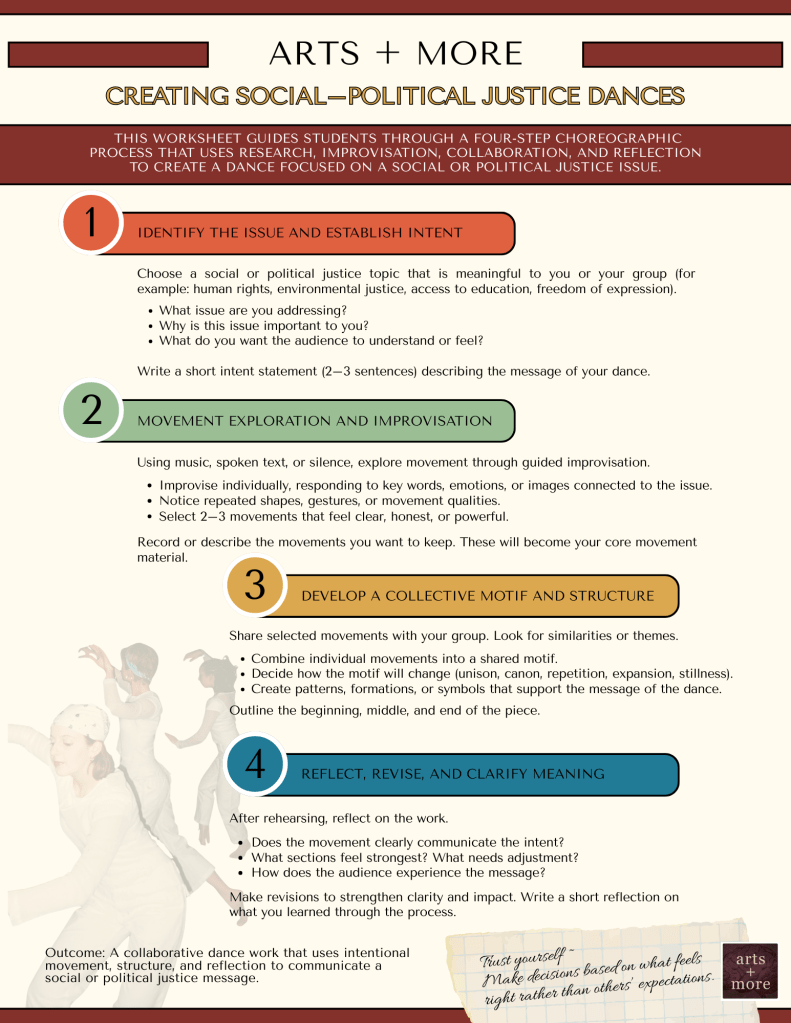
Creating Social-Political Justice Dances
Effective choreography begins with clarity of intent. Students are not asked to illustrate an issue, but to investigate it through movement.
Download this free four-step choreographic process worksheet designed for high school classrooms and studios. It supports critical thinking, collaboration, and student voice while providing clear structure for creative work.
This approach reflects a broader pedagogical principle. Past dance experiences are not preserved as artifacts, but analyzed as learning tools. Reflection on the process builds agency. Students learn how choices are made, revised, and sustained over time. Memory becomes instructional data. Meaning emerges through analysis. Momentum is achieved through repeatable processes that support long-term growth in teaching, choreography, and leadership practice.
This video captures Tibetan Freedom Dance, a powerful contemporary work choreographed by Allison Chrusciel Prucha and premiered in 2003 by the pre-professional contemporary dance students of Living Fountain Dance Company.
The performance was presented as part of the Celebrate Dance Concert in Canton, Ohio. The choreography is set to musical selections from the live recording of the Tibetan Freedom Concert, featuring the voices and music of Alanis Morissette and U2. Spoken narration drawn from the CD jacket is voiced by Danny Hinshaw, grounding the movement in the historical and humanitarian context of the music.
The Tibetan Freedom Concerts were a series of large-scale, socio-political music festivals launched in 1996 to raise awareness and support for Tibetan independence and broader social justice causes. Conceived by members of the Beastie Boys during the 1994 Lollapalooza Tour and organized with the Milarepa Fund, these concerts brought together major international artists and mobilized hundreds of thousands of people, especially young audiences, around issues of human rights. This dance reflects that spirit of collective voice, embodied activism, and youthful conviction, translating global concern into physical expression through ensemble movement.
- Performed by: Pre-Professional Contemporary Dance Students, Living Fountain Dance Company
- Choreography: Allison Chrusciel Prucha Music: Tibetan Freedom Concert (Live Recording)
- Narration: Danny Hinshaw Premiere: Celebrate Dance Concert, 2003 – Canton, Ohio
Thank you for watching and honoring the legacy of dance as a vehicle for awareness, empathy, and social engagement. This video preserves one piece from Celebrate Dance and reflects the inside-out creative process that shaped the Living Fountain Dance Company’s work during its early years.
Ready to build work that lasts?
If you’re ready to focus on consistency, trust, and impact, using your experiences to support your students, The Teaching Artist Toolkit provides practical tools to clarify goals, identify barriers, and create an action plan you can sustain.
Looking for deeper support?
Workshops with Kimberly Jarvis extend this work through guided reflection and applied practice. Reach out to book a session and continue building intentional, steady progress.
If you’ve found value in this work, I would love to hear from you. A short testimonial, Google review, or comment helps me improve and allows others to see the difference we’re striving to make together.


Leave a comment