
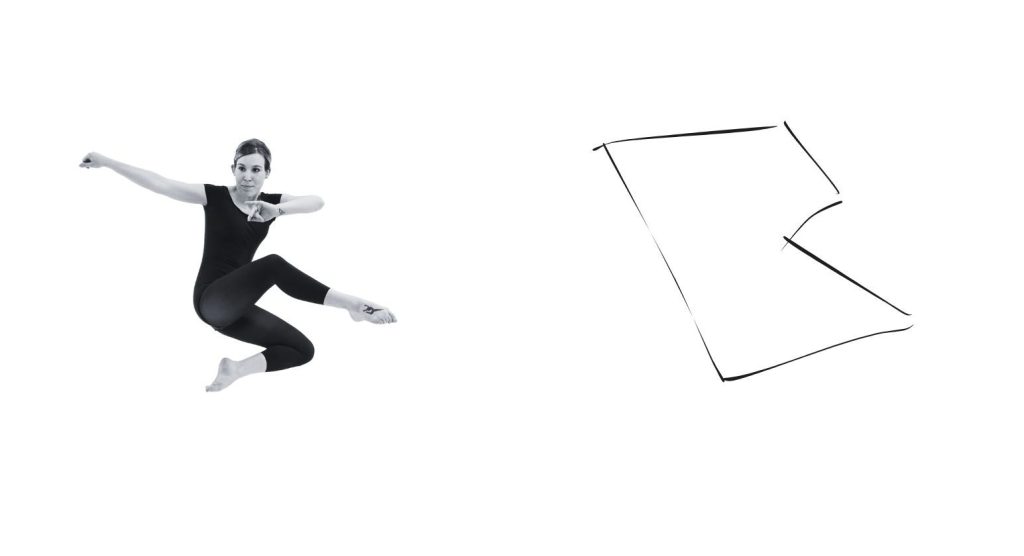
This week’s review on complex plane shapes is setting the stage for next week’s deep dive into 3D properties. Students will revisit patterns, lines, and symmetry through full-body movement, shape tracing, and collaborative exploration. By physically experiencing how intricate shapes come to life in space, they’ll sharpen spatial awareness, strengthen geometry vocabulary, and prepare for the leap from 2D to 3D reasoning. Engaging, memorable, and expressive—this lesson bridges today’s review to tomorrow’s new discoveries.
Lesson Title: Complex Plane Shapes in Motion
Grade Level: 2nd–4th Grade
Duration: 3 Class Periods (30 minutes each)
Standards
Math Standards
Geometry
- Recognize and classify complex plane shapes based on their attributes, including sides, angles, and symmetry.
- Identify and describe relationships between different shapes, including transformations and tessellations.
- Use spatial reasoning to analyze shape properties through movement-based exploration.
Measurement & Data
- Measure and estimate lengths in standard units.
- Apply measurement concepts to compare and contrast complex plane figures.
Dance Standards
Creating
- Explore and experiment with movement patterns to represent complex plane shapes.
- Use body positioning to demonstrate transformations, symmetry, and spatial relationships.
- Develop dance vocabulary and choreographic structures using a range of movement styles.
Performing
- Demonstrate kinesthetic awareness, self-direction, and safe practices when improvising and performing.
- Apply movement principles to create and maintain complex shape formations.
Responding
- Describe how movement patterns and body positioning reflect mathematical concepts.
- Analyze how different dance forms incorporate geometric transformations and symmetry.
Connecting
- Observe and explore dance forms that use structured shapes and formations.
- Recognize how movement and spatial awareness contribute to understanding geometry.
Essential Questions
- How do complex plane shapes appear in movement and everyday life?
- How can transformations and symmetry be represented through dance?
- What role does spatial reasoning play in understanding geometric relationships?
Learning Objectives
- Students will identify and describe complex plane shapes such as pentagons, hexagons, octagons, and irregular polygons.
- Students will explore and create complex plane shapes through full-body movement.
- Students will describe the attributes of shapes using movement vocabulary.
- Students will demonstrate kinesthetic awareness and spatial reasoning through dance-based shape activities.
Success Criteria
Identifying Shapes
- I can name and describe complex plane shapes and their attributes.
- I can identify sides, corners, and angles in complex shapes.
Exploration Through Movement
- I can use my whole body to trace and create complex plane shapes.
- I can move in ways that match different shapes and lines.
Kinesthetic Awareness
- I can move safely through space while exploring shape stations.
- I can follow directions and work respectfully with peers during movement tasks.
Materials
- Large floor tape outlines or cutouts of complex plane shapes (pentagon, hexagon, octagon, irregular polygons)
- Laminated shape cards (floor or table size)
- Music player and music tracks (optional)
- Paper and pencil worksheets with dancer shape images
- Crayons for journaling or drawing
- Optional: Shape wands, textured or raised-line shapes for tactile exploration
Lesson Activities
Activity One: What Are Complex Plane Shapes?
- Define complex plane shapes as 2D forms with multiple sides and angles that may include symmetry or irregularity.
- Discuss how transformations, rotations, and reflections affect shapes in movement.
Activity Two: Body Shapes
- Show images of pentagons, hexagons, and octagons.
- Ask students to create movements that reflect these shapes using different body parts (arms, legs, torso).
- Challenge students to form irregular polygons using their bodies.
Activity Three: View Dancers
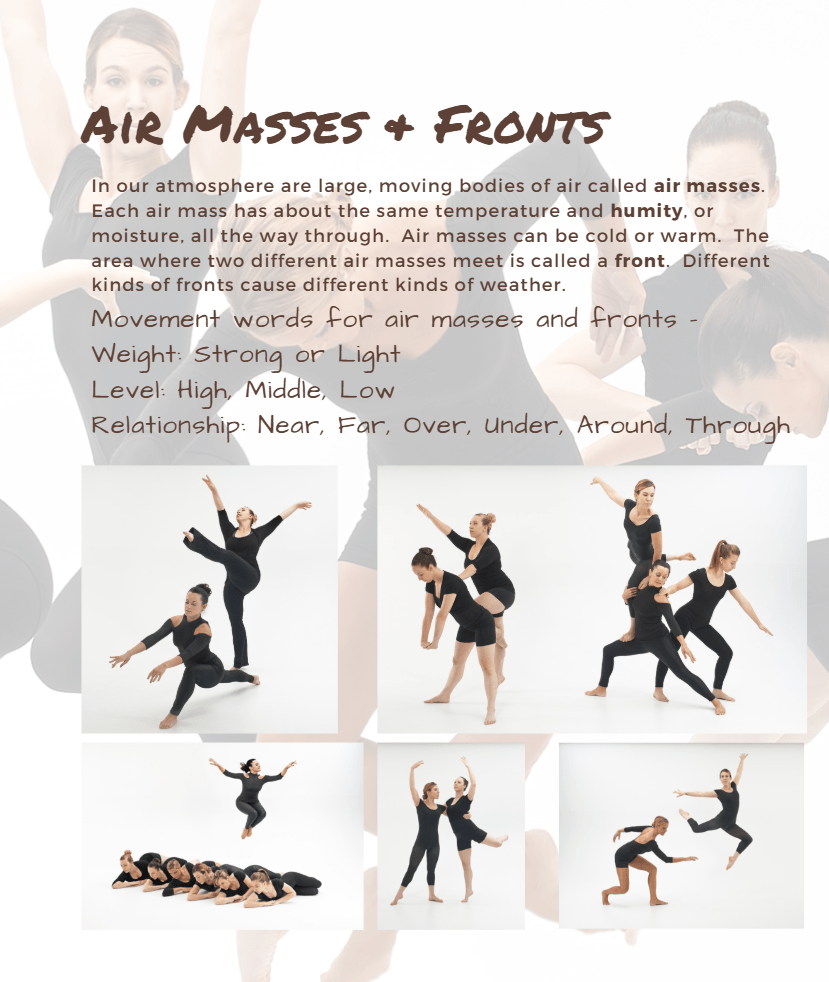
- View a dancer or photos of dancers making complex shapes.
- Students trace the shapes they see using their finger as a pencil or holding up ribbon to show the visual lines.
- Discuss how shapes can appear in many forms—there is no one “right” way.
Activity Four: Paper Shapes Worksheet
- View the pictures of the dancers and imagine the shapes they make with their body.
- Use a pencil on the page to trace the shapes you see.
- There are many ways to see complex plane shapes. They are all correct.

Adaptations and Modifications
Learner Needs Addressed
Students with visual impairments, motor delays, or sensory sensitivities.
Adapted Materials
- Use tactile or raised-line shapes for students who need sensory support.
- Provide shape wands or hand-over-hand tracing assistance for students with motor challenges.
Instructional Strategies
- Use simple, repeated instructions to reinforce concepts.
- Emphasize consistent shape vocabulary throughout the lesson.
Peer Support & Grouping Ideas
- Assign group roles: tracer, describer, measurer to encourage collaboration.
- Encourage peer modeling for movement and shape exploration.
Assessment
- Observe and document how students move to represent complex shapes.
- Listen for correct use of shape vocabulary.
- Use exit tickets or journals for students to draw or write about a favorite shape and how they moved like it.
Lesson Conclusion
Geometry is more than just numbers—it’s movement, space, and transformation. This lesson allows students to physically experience complex plane shapes, deepening their understanding of spatial relationships, symmetry, and transformations. Whether tracing a hexagon with their arms or identifying an irregular polygon in a partner’s pose, students engage with math in a dynamic, expressive, and meaningful way.

Leave a comment