

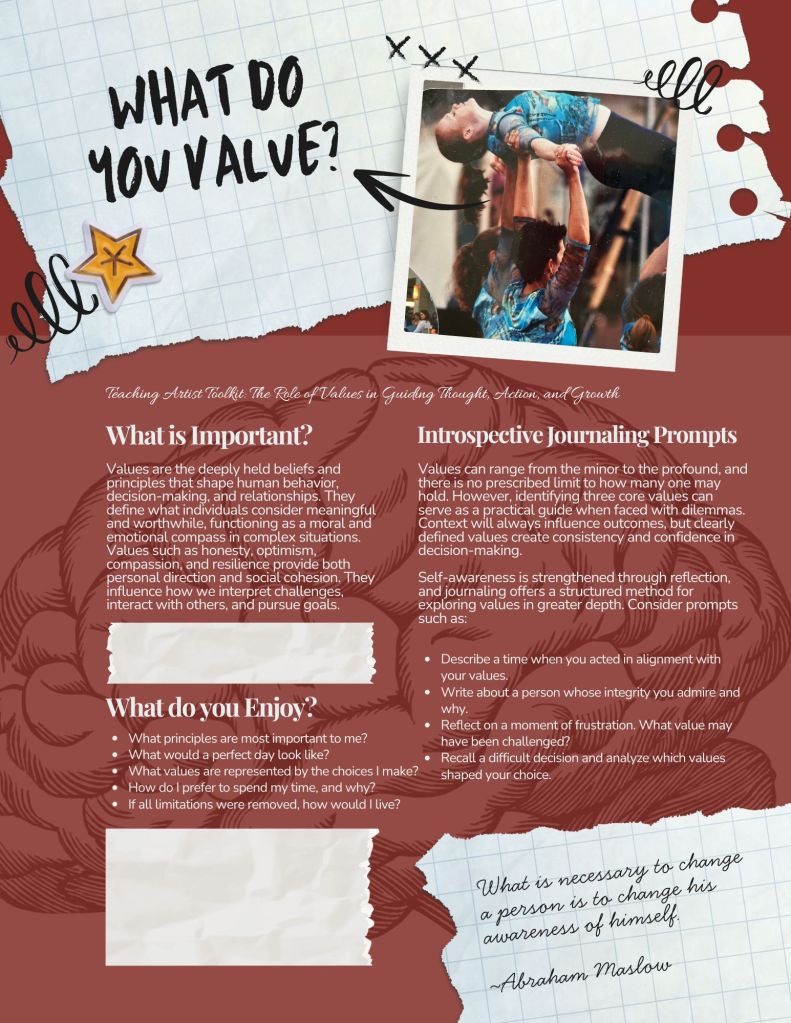
Values are the deeply held beliefs and principles that shape human behavior, decision-making, and relationships. They define what individuals consider meaningful and worthwhile, functioning as a moral and emotional compass in complex situations. Values such as honesty, optimism, compassion, and resilience provide both personal direction and social cohesion. They influence how we interpret challenges, interact with others, and pursue goals.
Beyond personal ethics, values form the foundation of emotional intelligence, the ability to recognize, understand, and manage one’s own emotions and those of others. Whether in education, administration, or business, understanding values enhances collaboration, empathy, and leadership. Yet before one can effectively understand or respect another’s values, one must first articulate one’s own.
The process begins with introspection. Consider the following questions:
- What principles are most important to me?
- What would a perfect day look like?
- What values are represented by the choices I make?
- How do I prefer to spend my time, and why?
- If all limitations were removed, how would I live?
Values can range from the minor to the profound, and there is no prescribed limit to how many one may hold. However, identifying three core values can serve as a practical guide when faced with dilemmas. Context will always influence outcomes, but clearly defined values create consistency and confidence in decision-making.
Self-awareness is strengthened through reflection, and journaling offers a structured method for exploring values in greater depth. Consider prompts such as:
- Describe a time when you acted in alignment with your values.
- Write about a person whose integrity you admire and why.
- Reflect on a moment of frustration. What value may have been challenged?
- Recall a difficult decision and analyze which values shaped your choice.
A relevant example comes from my own experience directing a dance studio. When our staff experienced unprecedented growth, I was unable to provide training at the needed pace. To maintain quality and efficiency, we adopted a framework of guiding values: listening with compassion, nurturing development, and releasing students toward their goals with innovation. These principles empowered staff to act decisively and courageously, preserving both trust and momentum. The pressure of success often complicates decision-making, but a shared commitment to values can stabilize a team under stress.
In educational environments, values such as loyalty, honesty, and optimism anchor both teachers and students to a shared vision of integrity and growth. When individuals and institutions align their actions with their values, they cultivate environments where authenticity, trust, and purpose thrive. The essential question, then, is not only what are your goals, but what values will guide you toward them?
Ready to bring consistency, trust, and impact to your work?
I invite you to download the Core Value Worksheet from the Teaching Artist Toolkit for practical tips to clarify your goals, identify barriers, and create an action plan for forward movement…
…WHICH MEANS you’ll start showing up with intention for your students and your creative projects today.
If you’ve found value in this work, I would love to hear from you. A short testimonial, Google review, or comment helps me improve and allows others to see the difference we’re striving to make together.





Leave a comment