
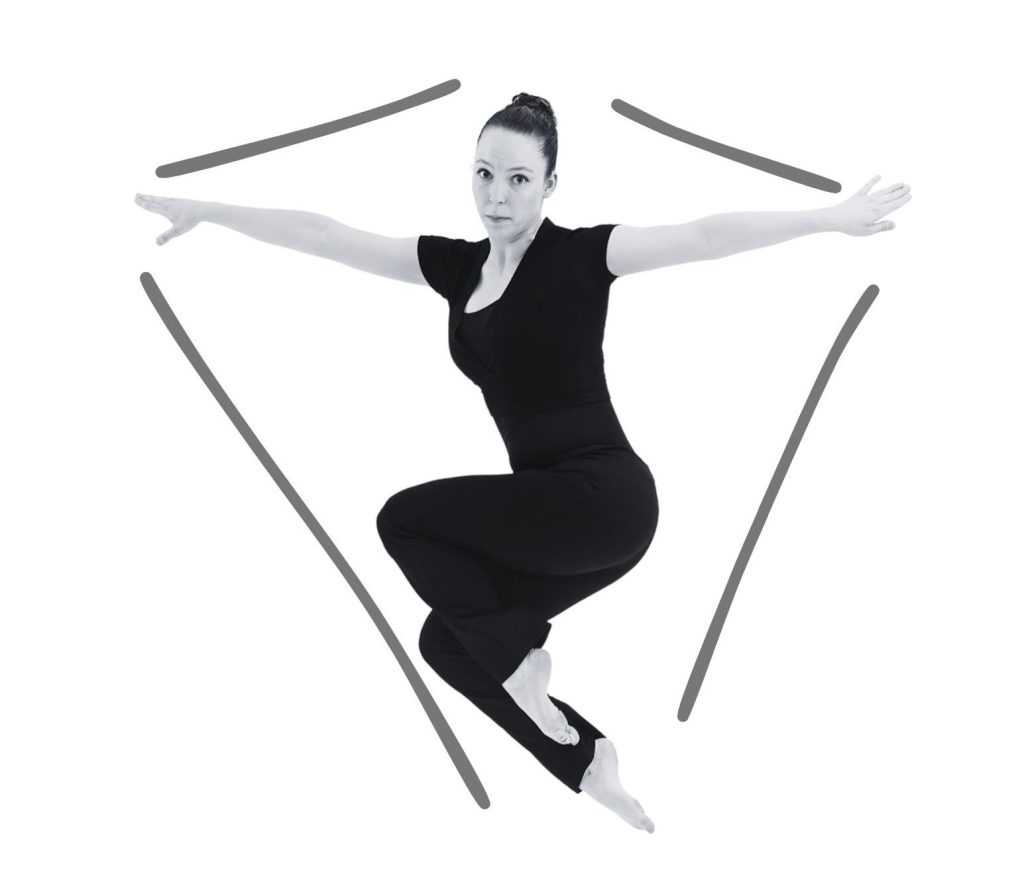
Lesson Title: Shape Squad Challenge
Grade Level: 3rd–5th Grade
Duration: 5 Class Periods (30 minutes each)
Standards:
- Math Standards
- Geometry:
- Recognize and classify quadrilaterals based on their properties (sides, angles, symmetry).
- Understand that shapes in different categories (e.g., rhombuses, rectangles) may share attributes.
- Partition shapes into equal parts and describe them using fractions.
- Measurement & Data:
- Measure and estimate lengths in standard units.
- Relate geometric properties to real-world applications through movement and spatial reasoning.
- Geometry:
- Dance Standards
- Creating:
- Explore and experiment with movement patterns to construct and express meaning.
- Use body positioning to represent geometric shapes and spatial relationships.
- Explore dance vocabulary and basic choreographic devices and structures using a range of music genres
- Performing:
- Demonstrate kinesthetic awareness, self-direction, and safe practices when improvising and performing.
- Apply movement principles to create and maintain quadrilateral formations.
- Responding:
- Describe how movement patterns and body positioning reflect mathematical concepts.
- Analyze how different dance forms incorporate geometric shapes.
- Connecting:
- Observe and explore dance forms that use structured shapes and formations.
- Recognize how movement and spatial awareness contribute to understanding geometry.
- Creating:
Essential Questions:
- How can body movement help us understand the properties of different quadrilaterals?
- What similarities and differences do various quadrilaterals share?
- How do angles and sides work together to define different shapes?
- How does a pattern of shapes create a dance?
Learning Objectives:
- Students will create and compare quadrilaterals using group body positioning.
- Students will use arms and ropes to emphasize angles, sides, and symmetry.
- Students will participate in shape identification activities to reinforce understanding.
- Students will engage in cooperative learning to enhance teamwork and spatial awareness.
Success Criteria:
Quadrilateral Formation:
- I can create quadrilateral shapes using my body and group positioning.
- I can use movement to compare different quadrilateral properties.
Kinesthetic Awareness:
- I can recognize and demonstrate angles, sides, and symmetry in quadrilaterals.
- I can safely and confidently participate in movement-based learning.
Shape Identification:
- I can correctly identify and classify quadrilaterals by their defining attributes.
- I can analyze mystery shapes and explain their properties using geometric vocabulary.
Materials:
- Large open space
- Shape cue cards (rectangle, square, trapezoid, rhombus, parallelogram)
- Optional ropes/ribbons/sticks for visualizing sides
- Tables, straws, or shape mats for seated modifications
Lesson Activities:
Activity One: Introduction

- Discuss the properties of different quadrilaterals.
- Explain how body movement can help represent geometric attributes.
Activity Two: Shape Squad Formations

In groups of four, students use their bodies to form different quadrilaterals.
Arms represent angles; ropes/ribbons/sticks help emphasize sides and symmetry.
Teacher calls out shape names, and groups form and freeze in position.
Activity Three: What’s My Shape Worksheet
One group creates a mystery quadrilateral using their bodies.
The class identifies the shape and explains its properties.
Use the worksheet to discuss angles, side lengths, and symmetry.
Draw stick figures of classmate quadrilaterals.

Activity Four: Create a Pattern of Quadrilaterals into Choreography

- Students create quadrilateral shapes with stick figures on the worksheet.
- Practice the changing from shapes to shape in the same order three times in a row.
- Add music to the pattern changes.
- Compare the changes with other teams.
Adaptations and Modifications
Learner Needs Addressed:
Students with coordination, spatial awareness, or confidence challenges.
Adapted Materials:
- Provide tabletop tiles or magnetic boards for quadrilateral construction.
- Offer labeled diagrams to support shape identification and matching activities.
Instructional Strategies:
- Limit the lesson to fewer shapes per session for gradual learning.
- Use chants or rhymes to help students remember properties (e.g., “A square is fair!”).
Peer Support & Grouping Ideas:
- Mixed-ability groups where students take different roles—builder, observer, labeler.
- Encourage students to model movements and offer guidance to peers.
Assessment:
- Use quadrilateral sorting mats or digital sorting tasks to check understanding.
- Observe student participation in movement-based shape formations.
- Assess how students describe and explain quadrilateral properties during group activities.
This engaging, movement-based lesson transforms geometry into a collaborative and experiential learning process. By physically forming quadrilaterals, students internalize shape properties through kinesthetic exploration, developing a deeper understanding of angles, sides, and symmetry. Whether working together to build a parallelogram or creatively identifying a mystery shape, students experience math as a dynamic, interactive subject that fosters confidence, teamwork, and critical thinking.

Leave a comment