
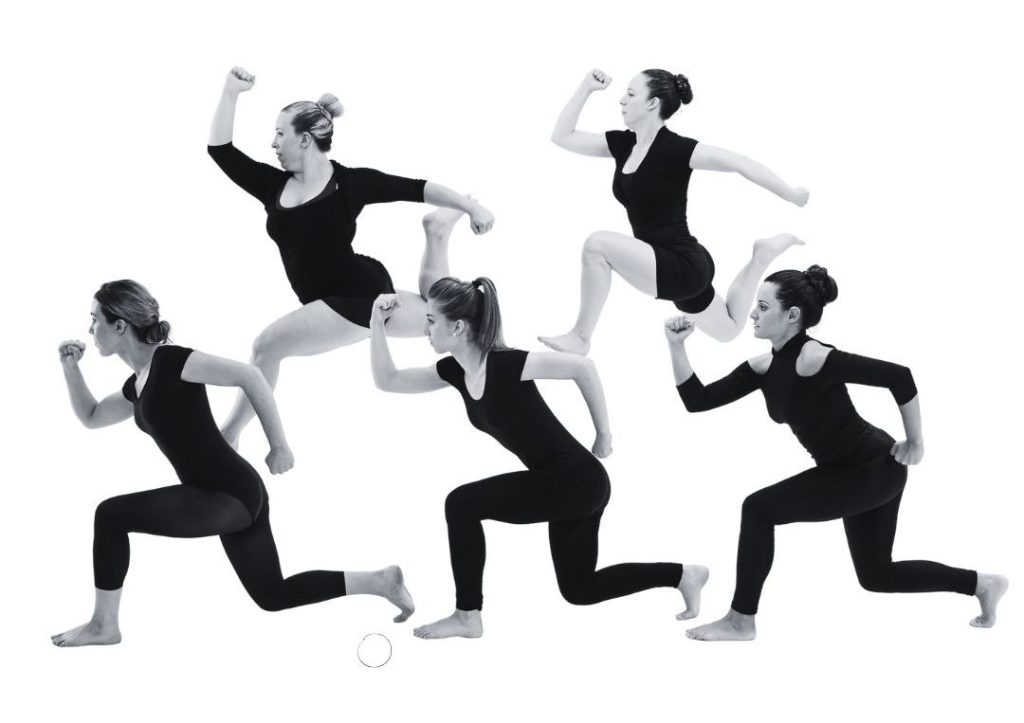
Angles show up everywhere—in the classroom, in the world around us, and even in the way we move our bodies. This lesson blends math and dance to help students see angles as more than lines on a page. By measuring and classifying right, acute, and obtuse angles, students build mathematical precision. At the same time, through movement, they embody those shapes, discovering how angles create form, space, and expression. When students stretch their arms into a wide obtuse angle or bend into a sharp acute angle, they connect abstract concepts with physical experience. This active approach not only reinforces geometry standards but also highlights how dance uses the same elements—space, shape, and energy—to communicate meaning. It’s a playful, kinesthetic way to bring math to life while honoring creativity and expression.
Lesson Title: Noticing the Angles Around Us
Grade Level: 3rd–5th Grade
Duration: 2–3 Class Periods (30 minutes each)
Standards:
- Math Standards: Understand and classify angles (right, acute, obtuse); identify angles in two-dimensional figures; use visual models to recognize and compare angle measures.
- Dance Standards:
- Students can identify and demonstrate common elements (such as space, time, and energy) and how they contribute to artistic expression.
- Students can safely and appropriately prepare their minds and bodies for dancing.
- Students explore how movement and shape are used expressively to communicate meaning.
Essential Questions:
- What is an angle, and how can I identify it in everyday life and dance?
- How can I use my body to explore and demonstrate geometric ideas like angles?
- How do angles shape both movement and structure?
Learning Objectives:
- Students will identify and differentiate between right, acute, and obtuse angles.
- Students will use full-body movement to demonstrate each type of angle.
- Students will observe angles in dance poses and everyday surroundings.
- Students will collaborate with peers to form and recognize various angle types.
Success Criteria:
- Right, Acute, and Obtuse Angles:
- I can show a right angle (90°) using my arms or legs.
- I can make an acute angle (less than 90°) with a body pose.
- I can form an obtuse angle (more than 90°) using movement.
- Observation & Description:
- I can identify angles in dance photos or classroom spaces.
- I can describe the angle types using correct vocabulary.
- Creative Application:
- I can create original poses showing different angles and share them with a partner or the class.
Materials:
Optional: Angle posters, floor tape, printed photos of dancers, worksheet handouts, popsicle sticks or angle tools
Lesson Activities
Introduction: Angles

Let’s create angles with our bodies.
- Begin with a warm-up to stretch arms and legs safely.
- Discuss what an angle is and introduce the types: right, acute, and obtuse.
- Invite students to “draw” these in the air with their bodies, gradually introducing shape vocabulary.
Activity One: Angle Action
- Teacher calls out different angle names. Students create the angle using their arms, legs, or torso.
- Play a body geometry quiz game in pairs—students show an angle, and their partner guesses the type.
- Optional: Use angle flashcards or hidden shapes around the room for an “angle scavenger hunt.”
Activity Two: Paper Angles Worksheet
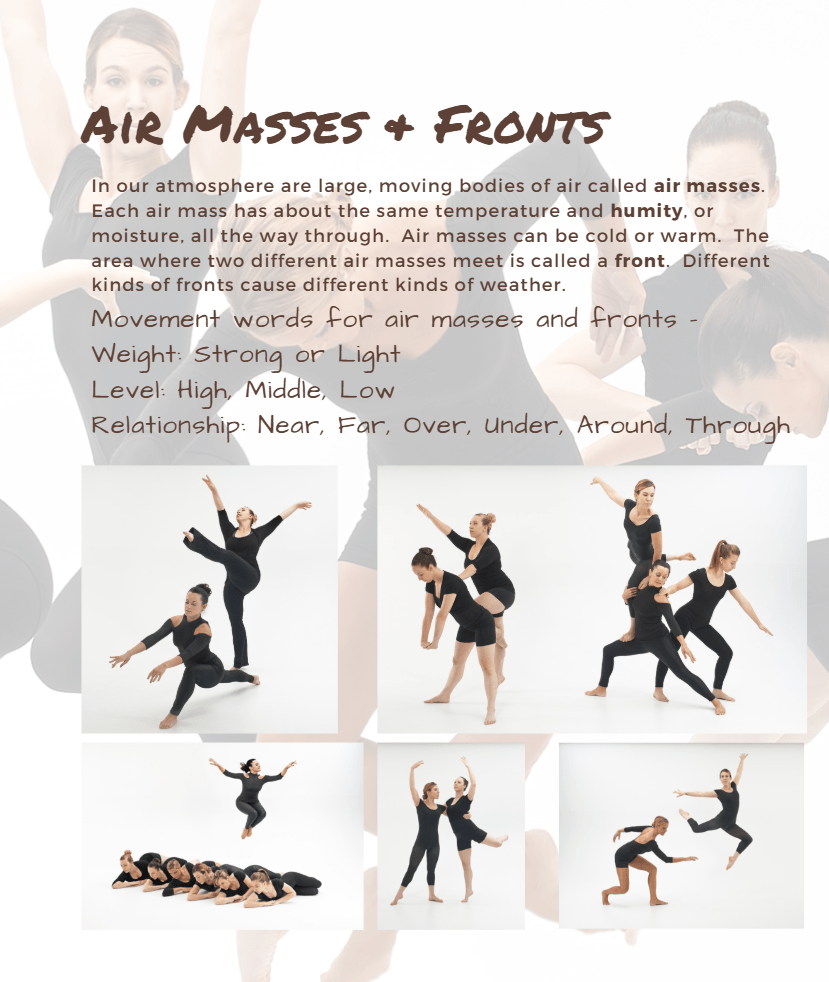
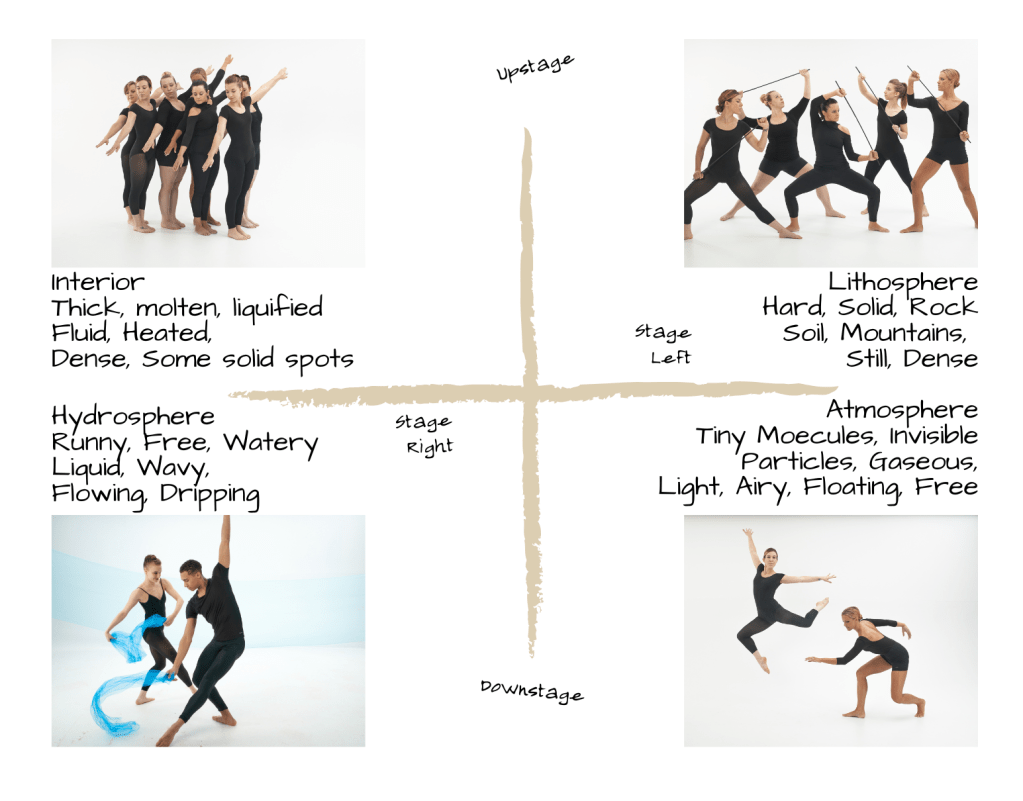
- View the pictures of the dancers and imagine the angles they make with their body.
- Assignment: Using your pencil, please label the stage right arm, stage left arm, stage right leg, and stage left leg. (You are the audience.)
- Please circle the right angles made by dancers in the photograph.

Activity Three: Angle Poses

- Students create three distinct poses that include one right angle, one acute angle, and one obtuse angle.
- Partner work: students teach their poses to each other, identifying the angles together.
- Optional: Photograph each student pose and post it on a classroom “Angle Wall.”
Modifications for Space / Equipment:
- Students may work at desks or in chairs if movement is restricted.
- Use popsicle sticks, small angle models, or hand-held visuals for forming shapes when body use is limited.
Adaptations:
- Learner Needs Addressed: Physical limitations, low coordination, anxiety, or processing differences
- Adapted Tools: Velcro angle bands, angle spinners, laminated visuals
- Instructional Strategy: Repetition, modeling, simple cue words (e.g., “big angle,” “small angle”)
- Peer Grouping: Partner or group-based angle formation; assign supportive roles (modeler, spotter, describer)
Assessment Notes:
- Observe students during movement activities—can they accurately form and identify angles?
- Use sorting cards or angle classification worksheets for seated assessments.
- Ask students to walk around the room and point to real-world examples of each type of angle.
- Optional exit ticket: Draw or name one real-world example of each angle type.
Through this lesson, students gain a deep, embodied understanding of angles by exploring them with both movement and observation. Connecting mathematical definitions to expressive dance elements makes geometry more engaging and memorable. By identifying angles in poses, environments, and artistic expression, learners discover that math and movement are deeply interconnected—and that angles are truly all around us.

Leave a comment