

Teaching Artists are like creative superheroes who bring art, music, dance, and storytelling into different schools. Because they move from school to school, they get to see lots of different school cultures. Each school has its own “personality” with its own rules, routines, and ways of doing things. Some schools are super loud and energetic, while others are calm and quiet. Some schools love group projects, while others like students to work more independently.
For Teaching Artists, understanding a school’s culture is really important. It helps them figure out how to fit in and connect with the students and teachers. Culture gives them clues about what is expected, like how students line up, how they ask questions, and how they celebrate each other’s work. When Teaching Artists pay attention to these patterns, they can build trust faster and make their lessons feel like a natural part of the school day.
Culture also helps Teaching Artists know what the school values. Maybe one school focuses a lot on teamwork, while another celebrates individual creativity. Knowing this helps them shape their activities so students feel supported and successful. Over time, Teaching Artists can even add their own spark to the culture, showing students new ways to think and express themselves while still respecting the school’s values and routines.
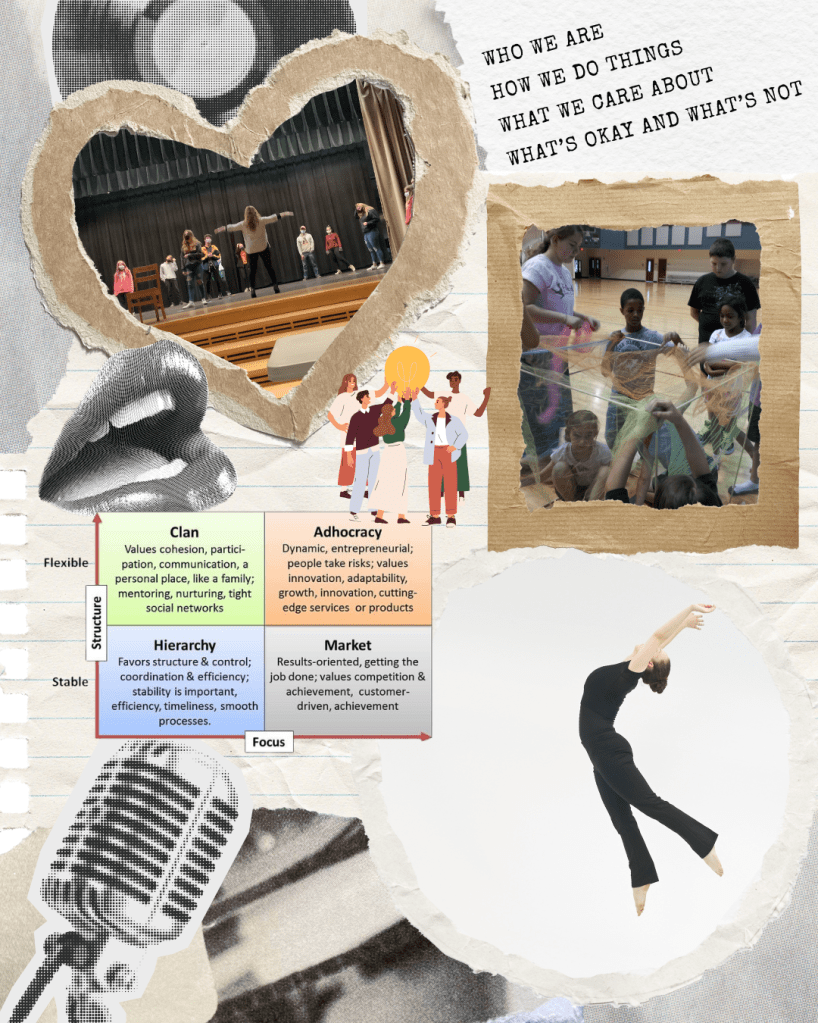
What Is Organizational Culture? (And Why It Matters)
Imagine the school you went to…
Everyone knows the school mascot, the rules, the traditions, and even the unspoken stuff, like how you line up for lunch or cheer at games.
A workplace can be kind of like that too. The “feel” of a place and the way people are expected to act is called organizational culture. It’s like the personality of a company.
Culture is important because it helps everyone work together. Think of it as the glue that holds a group of people together.
There are four main jobs (functions) that culture does inside an organization:
1. It Gives People an Identity
Culture helps people feel like they belong.
Just like wearing your school colors shows you’re part of the team, company culture helps people feel proud to be part of the group.
2. It Helps People Understand What’s Going On
Culture shows people how things work.
It’s like an instruction manual for how to behave, who to ask for help, and how to get things done.
3. It Reminds Everyone of the Group’s Values
Culture teaches people what the group believes is important.
For example, if teamwork is a big deal, the culture will reward people who help each other out.
4. It Acts Like a Set of Rules
Culture helps people know what’s okay and what’s not okay.
If someone breaks the rules, there are consequences. If they do well, they’re recognized and rewarded.
How New People Learn the Culture
When new people join an organization, they go through a process called organizational socialization. It’s like how new students learn how your school works. There are three steps:
- Anticipatory Stage – This is before they even start. They learn about the company and see if it matches their values (kind of like choosing a school or club you’d fit in).
- Encounter Stage – This is their first days and weeks on the job. They see what the place is really like.
- Change and Acquisition Stage – Over time, they pick up the habits, values, and ways of doing things and become part of the group.
In Short
Organizational culture tells people:
- Who we are
- How we do things
- What we care about
- What’s okay and what’s not
It helps people work together, feel like they belong, and keep the organization running smoothly, just like your school’s culture helps students feel connected and understand how things work.
Teaching Artists spend their days weaving creativity into many different school cultures, and no two schools are ever the same. Because of that, sharing stories and strategies with other Teaching Artists can be incredibly powerful. When you connect with peers, you gain fresh ideas for building trust, managing classrooms, and adapting your art to fit each school’s unique personality. Networking turns your individual experiences into a collective toolbox of wisdom. By learning from one another, Teaching Artists can grow stronger, more flexible, and more confident, and make even better connections with the students they serve.



Leave a comment