
Lesson Title: Seeing Lines in Movement
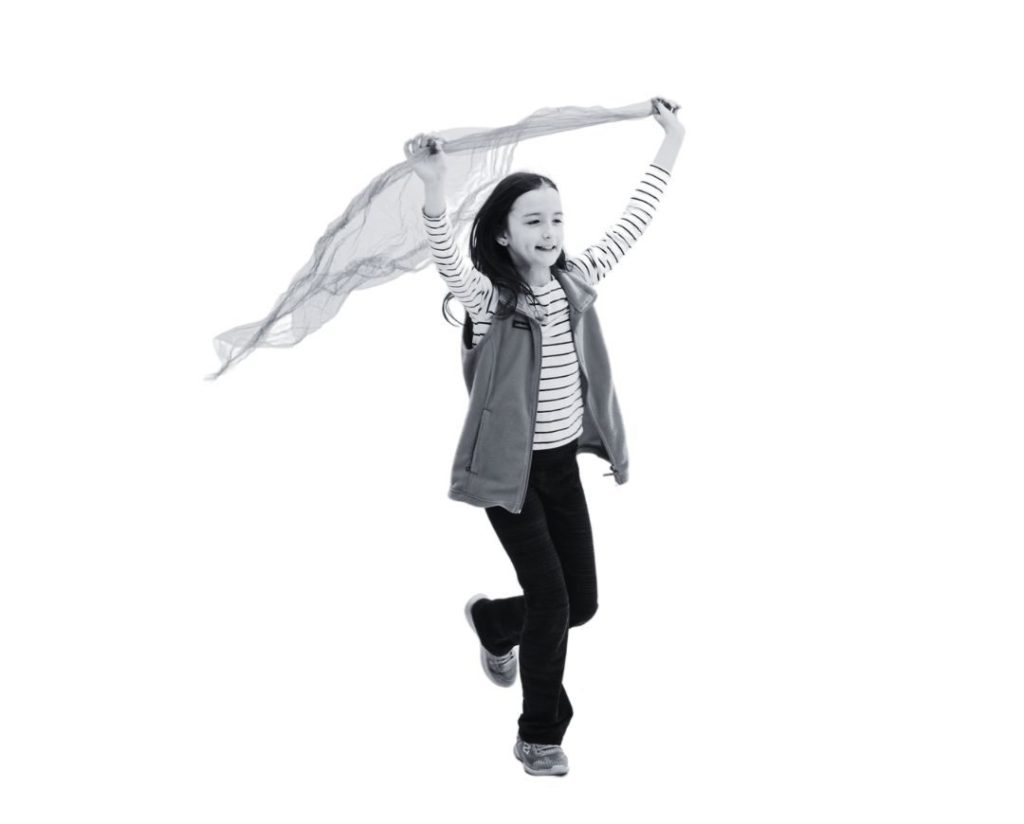
Geometry often feels abstract on paper, but when students are invited to explore it through movement, it becomes alive, joyful, and accessible. Instead of only drawing lines with pencils and rulers, we can ask: how can we feel the geometry of lines with our bodies? When students stretch their arms wide, bend at an angle, or walk across the floor, they are tracing lines through space. These movements make geometric concepts visible and memorable, while opening the door for all learners—including those who may learn best through kinesthetic or creative approaches.
By framing these questions—What kinds of lines can we see and create with our bodies? What lines exist in our environment?—we invite curiosity and play. Straight lines might appear in the way students stand tall, while curved lines can be drawn with sweeping arm movements or a spin across the room. Zigzags emerge from playful jumps, and parallel lines show up when two students move side by side. Even the classroom itself becomes part of the lesson: doorways, desks, and windows reveal the geometry that surrounds us every day.
This approach not only deepens mathematical understanding but also builds inclusivity. Movement offers multiple entry points for learners with different strengths, making geometry something everyone can participate in. By combining accessibility with play, we remind students that math is not just something to solve—it’s something to experience.
Grade Level: 2nd–4th Grade
Duration: 3 Class Periods (30 minutes each)
Standards:
Mathematics (Geometry):
- Recognize and draw shapes having specified attributes.
- Identify and describe lines and angles, and classify shapes by properties of their lines and angles.
Dance:
- Explore and experiment with basic locomotor and non-locomotor movement patterns using changes in time, space, body shape, and movement quality.
- Demonstrate kinesthetic awareness, self-direction, and safe practices when improvising and performing.
- Observe, describe, and analyze movement elements and patterns in dance.
Essential Questions:
- How can we use movement to understand the geometry of lines?
- What kinds of lines can we see and create with our bodies and in our environment?
Learning Objectives:
- Students will identify and describe parallel, perpendicular, intersecting, horizontal, vertical, and diagonal lines.
- Students will create and represent different types of lines using body movements and props.
- Students will use directional awareness to understand different planes and perspectives.
- Students will work collaboratively to form lines and analyze movement from multiple viewpoints.
Success Criteria:
Geometry and Line Recognition:
- I can identify and describe parallel, perpendicular, intersecting, vertical, horizontal, and diagonal lines.
- I can locate a vertex where two or more lines meet.
Movement Integration:
- I can draw lines in space using my whole body and props like scarves or ribbons.
- I can work with a partner or group to form line types using movement.
- I can use directionality to understand how lines appear from different perspectives.
Kinesthetic and Spatial Awareness:
- I can show awareness of my body and others while performing line-based movements.
- I can safely navigate and respond to movement prompts related to lines and space.
Materials:
- Floor tape or chalk
- Fabric or scarves for movement
- Visual aids or labeled line type cards
- Ribbon or painter’s tape for body tracing
- Worksheets with dancer line images
- Pencils and crayons
- Music (optional)
Lesson Activities
Introduction: What Is a Line?
Define types of lines: vertex, parallel, intersecting, perpendicular, horizontal, vertical, diagonal.
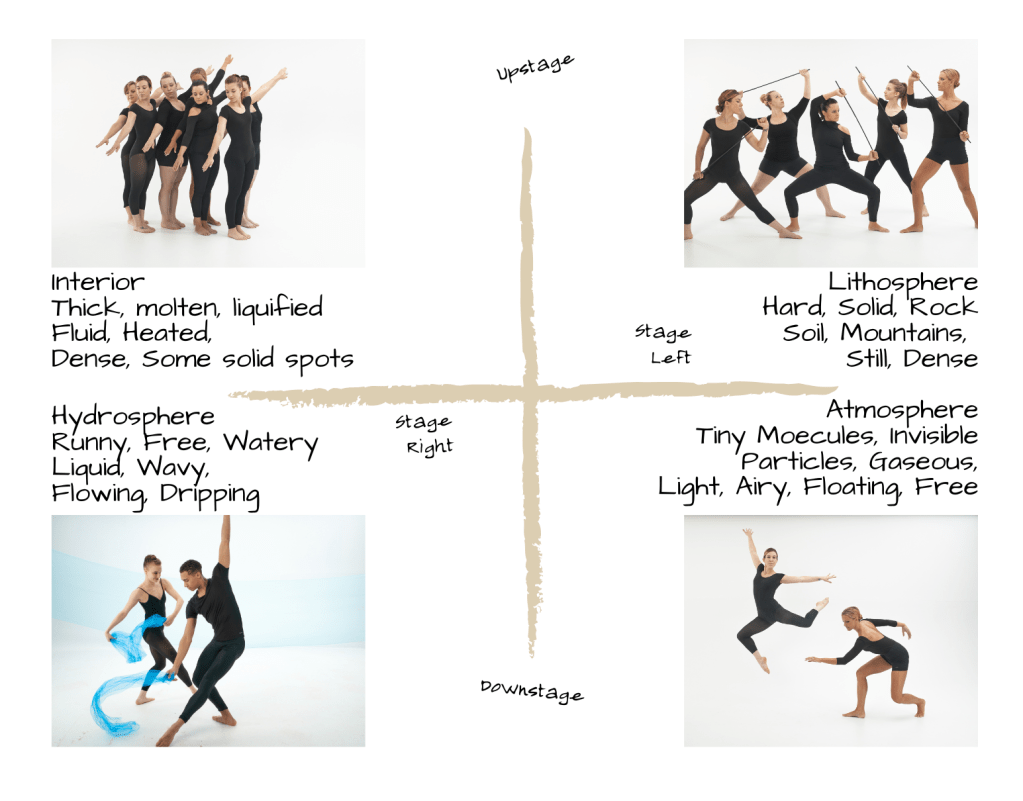
Introduce visual perspectives: frontal plane (audience view) and bird’s eye view (transverse plane).
Use stage diagrams or classroom layouts to demonstrate.

Activity One: Painting Dance Lines
Let’s draw lines in the sky with props to show lines in the bird’s eye view (transverse plane).

Give each student a piece of colored fabric or scarf.
Prompt students to draw lines in the air while walking, galloping, or leaping.
Have students form different line types (parallel, intersecting, perpendicular) in pairs or teams.
Activity Two: Lines Pose Worksheet
Let’s draw lines in the frontal plane.
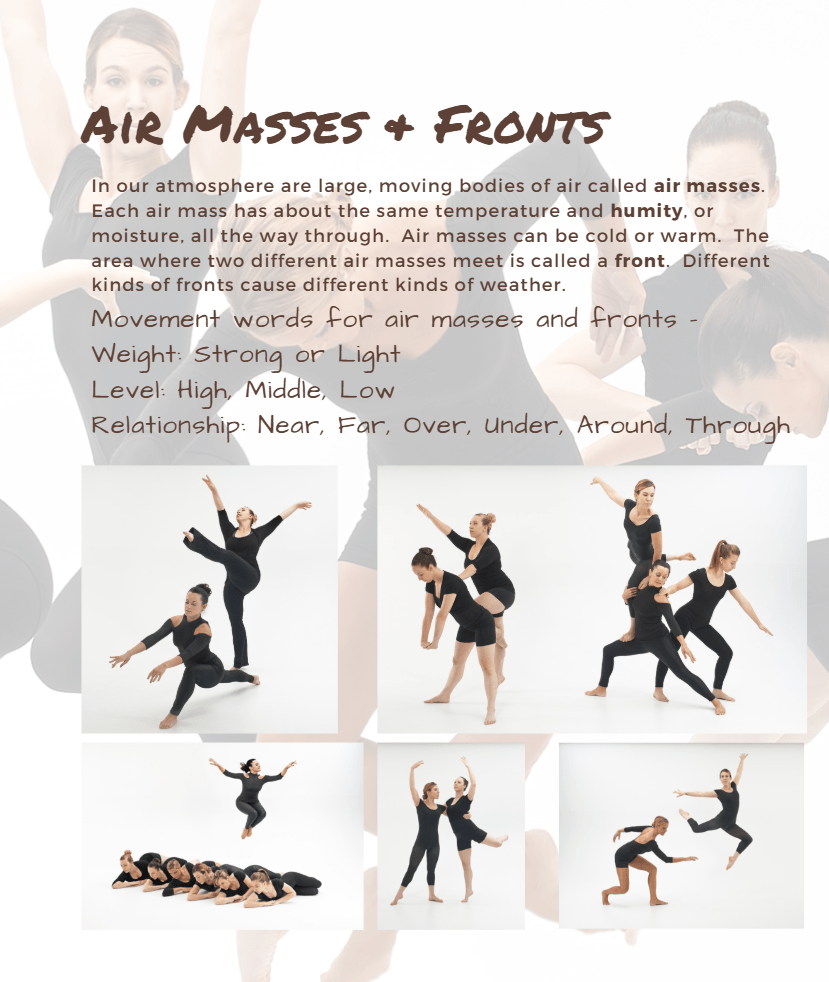
- Show pictures of dancers forming lines with their bodies.
- Use ribbon or painter’s tape to help students visualize lines on a volunteer (with consent and sensitivity).
- Students draw stick figures and trace the lines they see with crayon.

Activity Three – Line Dance Call & Response
- Review line types with visuals.
- Call out a line type; students create it with their bodies, solo or in pairs.
- Use music or a timer to rotate line types and make it interactive.
- Optional: Build a “line dance” sequence incorporating all learned line types.
Adaptations and Modifications:
Learner Needs Addressed:
- Students with physical limitations, motor delays, or low body awareness.
Adapted Materials:
- Use manipulatives like sticks, yarn, or magnets for visual/tactile learners.
- Provide shape cards for seated students to arrange on trays or desks.
Instructional Strategy:
- Teach one line concept at a time with visuals and repetition.
- Use consistent vocabulary and physical cues for reinforcement.
Peer Support:
- Pair students to model and describe each line type.
- Encourage verbal sharing and reflection on body shapes.
Assessment:
Use a closing discussion or journaling prompt: “What kind of line did you enjoy making the most and why?”
Observe participation during movement activities—look for correct line formation and vocabulary use.
Provide a sorting task (match line names to pictures).
Collect worksheet drawings to check for understanding of visual lines and body alignment.
This lesson transforms geometric concepts into embodied experiences, allowing students to learn about lines not just with their eyes, but with their whole bodies. By dancing and drawing lines in space, students gain a deeper understanding of how geometry exists all around them—in art, in movement, and in everyday life. Exploring terms like parallel, intersecting, and perpendicular through movement makes abstract ideas concrete and memorable. This kinesthetic approach builds confidence, spatial reasoning, and creativity, while supporting a wide range of learning styles and needs.

Leave a comment